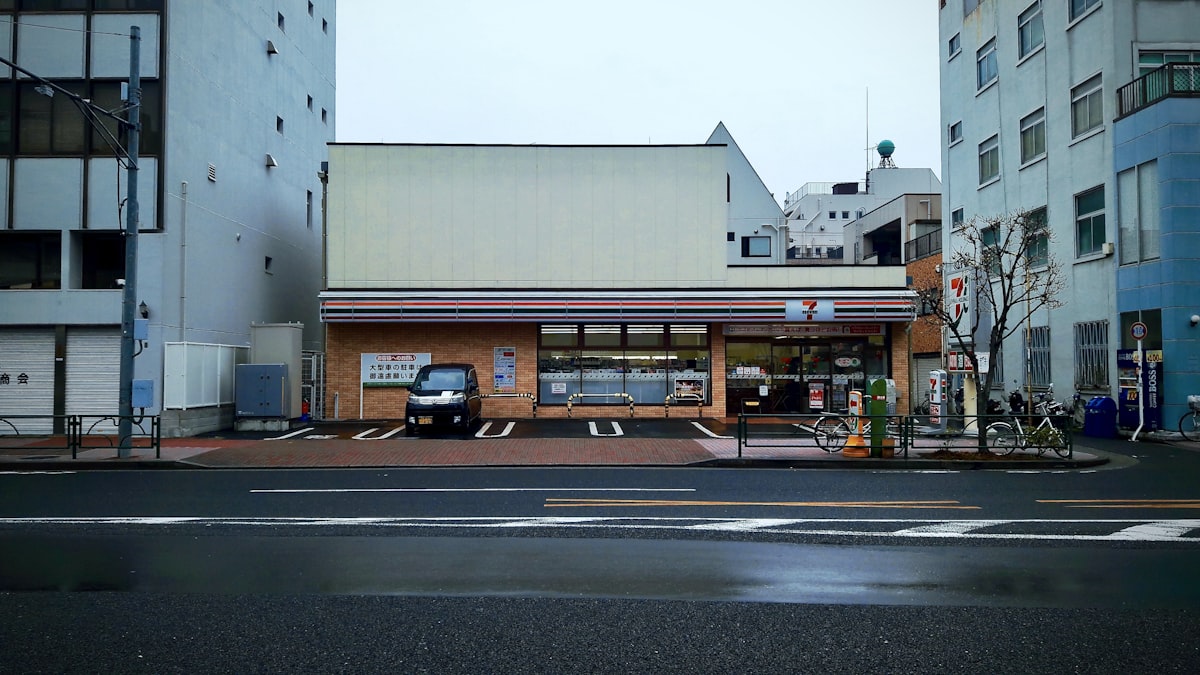
There is a moment that happens to almost every first-time visitor to Japan. You walk into a 7-Eleven at 11pm looking for a snack, and you walk out twenty minutes later having discovered one of the most extraordinary retail environments on the planet. The coffee is better than the café down the street. The onigiri is fresher than you expected. The hot food case smells incredible. The ATM accepted your foreign card without complaint. And somehow the entire experience cost you under ¥1,000.
Japan’s convenience stores — konbini — are not like convenience stores anywhere else in the world. They are not a fallback option for when real restaurants are closed. They are a genuine part of Japanese food culture, a logistics hub, a financial services provider, a ticketing office, a pharmacy, a printing center, and occasionally a place that will ship your luggage to the airport for less than the price of a taxi. Understanding how they work transforms your trip.
This is your complete Japan convenience store guide 2026 — everything a first-time visitor needs to know about konbini, organized so you can start using them confidently from day one.
Table of Contents
- The Big Three: 7-Eleven, Lawson & FamilyMart
- Konbini Food: What to Buy and What to Try First
- Drinks: Coffee, Tea & Everything Else
- ATM & Money Services
- Payment: IC Cards, QR Codes & Cash
- Beyond Food: The Services That Will Surprise You
- Konbini Etiquette: How to Behave Like a Local
- Seasonal & Limited Items: The Konbini Calendar
- Top Konbini Hacks for Tourists
- Quick Reference Summary Table
1. The Big Three: 7-Eleven, Lawson & FamilyMart

Japan has over 55,000 convenience stores nationwide — roughly one for every 2,300 people. Three chains dominate: 7-Eleven (Seven-Eleven Japan), Lawson, and FamilyMart. You will encounter all three within your first hour in the country, and each has a distinct personality worth knowing.
🟢 7-Eleven Japan — The Gold Standard
Most Locations Nationwide
With over 21,000 stores across Japan, 7-Eleven is the largest and most widely trusted konbini chain. The food quality is consistently excellent — the onigiri, sandwiches, and hot food case are benchmarks against which other chains measure themselves. The 7-Bank ATM inside every store is the gold standard for international card withdrawals, accepting virtually all Visa, Mastercard, and Maestro cards 24 hours a day. If you only remember one konbini name, make it this one.
💡 Pro Tip: 7-Eleven Japan operates completely independently from its American counterpart and is actually superior in almost every way. The Japanese parent company (Seven & i Holdings) acquired the US business — not the other way around.
🔵 Lawson — The One for Desserts and Variety
Best Desserts & Sweets
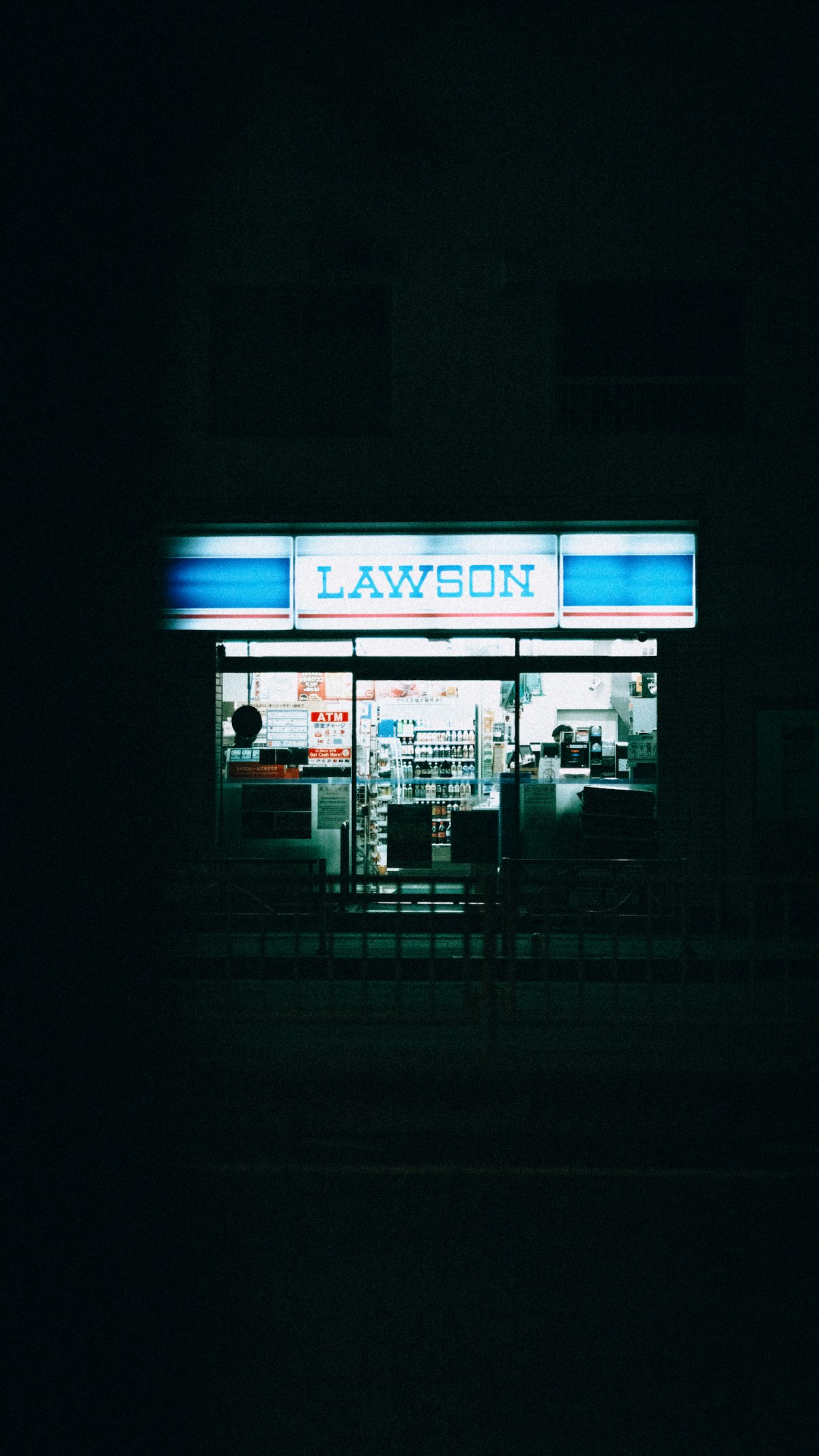
Lawson is the chain most beloved for its dessert section. The Uchi Café sweets range — premium rollcakes, parfaits, eclairs, and seasonal limited items — has a devoted following among Japanese consumers and visitors alike. Lawson also runs Natural Lawson (a health-focused sub-brand) and Lawson 100 (a ¥100 discount format). The Loppi kiosk inside Lawson stores handles ticket purchases for concerts, sports events, and some attractions — all operable in English.
🟡 FamilyMart — The One with the Jingle
Best Fried Chicken & Hot Foods
FamilyMart is instantly recognizable by its cheerful entry jingle (a three-note melody you will be humming within two days). The Famichiki — FamilyMart’s proprietary fried chicken — is one of the great konbini foods, and the chain’s hot food case is consistently strong. The FamiPort kiosk handles ticket purchases similarly to Lawson’s Loppi. FamilyMart also has an excellent loyalty app with digital coupons and point accumulation.
⚠️ Heads Up: Mini Stop and Daily Yamazaki are smaller chains you may encounter, particularly outside major cities. Mini Stop is notable for its soft-serve ice cream. Both are reliable in a pinch but have fewer services and a smaller range than the big three.
2. Konbini Food: What to Buy and What to Try First
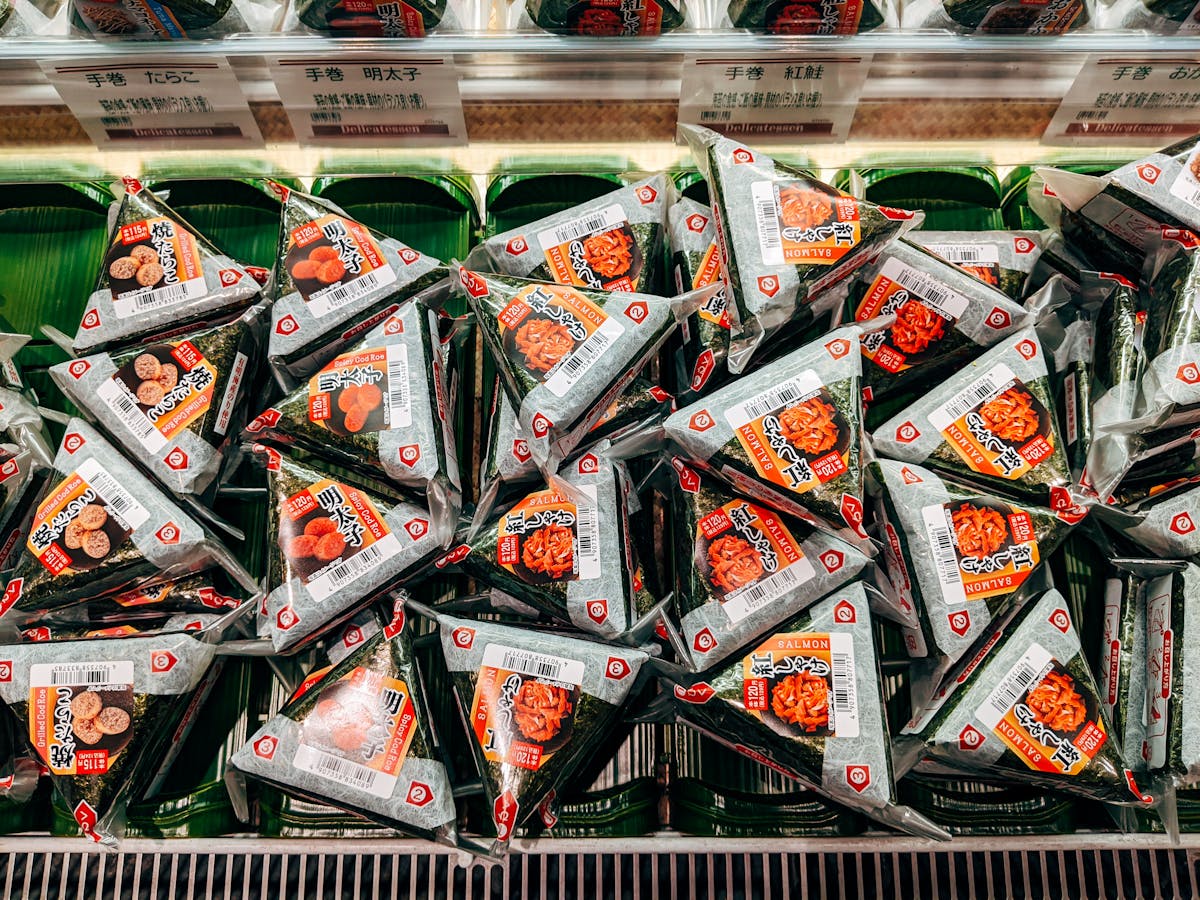
The food at Japanese convenience stores is genuinely good — not “good for a convenience store” good, but good by any standard. Here is what to prioritize on your first visit, organized by category.
🍙 Onigiri — Start Here
Must-Try ¥120–180
Onigiri are triangular rice balls wrapped in nori (seaweed), filled with a single ingredient in the center. They are Japan’s perfect portable food — fresh, satisfying, and cheap. The packaging has a clever three-step tear-open mechanism that keeps the nori crispy until you open it. If you have never done this before, watch someone else do it first or ask a staff member — it’s a specific folding sequence and fighting it incorrectly results in a crumpled mess.
Classic fillings to try: shake (grilled salmon — the bestseller), tuna mayo (tuna mixed with Japanese mayonnaise — addictive), kombu (pickled kelp — mild and savory), and umeboshi (pickled plum — intensely sour, acquired taste). Use Google Translate camera to read the kanji on any unfamiliar filling before you buy.
Sandwiches & Bread Items
Japanese konbini sandwiches are far better than their appearance suggests. The egg salad sandwich — creamy, soft, on pillowy white bread — is a national obsession. Tamago sando (egg sandwich) from any of the three major chains consistently ranks among Japan’s most beloved foods. The fruit sandwich (fruits + whipped cream between sliced white bread) sounds wrong and tastes right.
🍱 Bento Boxes — A Full Meal for Under ¥600
Highly Recommended ¥450–650
The bento section offers complete meals — rice, protein, vegetables, pickles — for well under what a restaurant would charge. Staff at the counter will offer to microwave your bento for you (they will ask “atatamemasu ka?” — “shall I warm it up?”). The answer is almost always yes. Nod and hand it over. It will come back perfectly heated in about 90 seconds.
Hot Food Case
The glass case near the register holds hot items: steamed nikuman (pork buns, especially popular in winter), fried chicken pieces, corn dogs, and rotating seasonal items. Point at what you want — no Japanese required. These are charged at the register and handed to you in a small bag.
🍜 Instant Noodles — The Proper Version
Japanese konbini instant noodles are not the dried-brick ramen of your student days. They are fresh, soft noodles in sealed cups with liquid broth sachets — add hot water from the dispenser near the register (free to use, just ask) and wait three minutes. The quality is genuinely impressive. Nissin, Maruchan, and regional specialty brands line the shelves. Look for the “cup noodle” section and use Google Translate to identify flavors.
🍰 Desserts — Lawson Leads, All Three Deliver
Must-Try ¥150–400
The dessert section deserves serious attention. Lawson’s Uchi Café range is the most celebrated — the Swiss roll (rollcake), fresh cream puffs, and seasonal parfaits are genuinely excellent by any standard. 7-Eleven’s pudding and cheesecake range is also strong. FamilyMart’s soft-serve and parfait options are reliable. Budget ¥200–350 for a proper konbini dessert and do not feel guilty about it — this is a cultural experience.
💡 Pro Tip: Check the sell-by date sticker on refrigerated items. Most konbini food has a very short shelf life (same-day or next-day), which is why the quality is so high — turnover is constant and fresh stock arrives multiple times daily.
3. Drinks: Coffee, Tea & Everything Else
The drinks section of a Japanese konbini is a destination in itself. Cold, room temperature, and hot drinks share the same refrigerated wall — hot drinks are in the right-hand section of the cooler, marked with a red label or a small heating icon. Do not make the mistake of grabbing a hot can and expecting it to be cold.
☕ Konbini Coffee — Genuinely Excellent
Must-Have ¥100–200
All three major chains offer fresh-brewed coffee from a self-service machine near the register. You pay at the register first, receive a cup, and operate the machine yourself — push the button for your size and type. The coffee is genuinely good: smooth, fresh, and properly hot. 7-Eleven’s coffee machine is the most reliable and consistently well-maintained. A large latte costs around ¥180 — less than a third of a café price for comparable quality.
How to Order Konbini Coffee Step by Step
- Bring an empty cup to the register (take from the stack near the machine, or the cashier will give you one)
- Tell the cashier what size you want by pointing at the size chart, or hold up fingers (one for small, two for medium, three for large)
- Pay at the register
- Take your cup to the machine and press the button matching your drink (pictures are on the buttons)
- Wait 30–40 seconds for fresh brewing
🍵 Tea, Canned Coffee & Everything in Between
The bottled and canned drinks wall is one of Japan’s great consumer experiences. Green tea (unsweetened, which surprises some visitors — Japanese tea is not sweet by default), mugicha (roasted barley tea), hojicha (roasted green tea), black tea, sports drinks, vegetable juices, and dozens of regional and seasonal varieties fill the cooler. Prices run ¥100–180 for most drinks.
⚠️ Heads Up: Japanese canned coffee comes in two versions — hot (あたたかい, atatakai) and cold (つめたい, tsumetai). The cans are identical except for the label color: red label = hot, blue label = cold. Both sit in the same cooler section. Check the label before grabbing.
4. ATM & Money Services: Your Most Reliable Cash Source
The ATM inside a Japanese convenience store — particularly the 7-Bank ATM in every 7-Eleven — is the single most reliable way to withdraw yen as a foreign visitor. Here is everything you need to know.
🏧 7-Bank ATM — The International Traveler’s Best Friend
Essential 24 Hours
The 7-Bank ATM accepts virtually all international Visa, Mastercard, Maestro, Cirrus, American Express, and UnionPay cards. The interface has an English menu button — press it immediately when you approach the machine and the entire process becomes straightforward. Withdrawal fees are ¥110–220 per transaction depending on time of day and your home bank’s charges.
Step-by-Step: Using a 7-Bank ATM with a Foreign Card
- Press the “English” button on the touchscreen (top right corner)
- Insert your card
- Select “Withdrawal”
- Enter your PIN
- Select the amount (¥10,000 increments; maximum ¥50,000 per transaction on most foreign cards)
- Confirm and collect your card first, then your cash and receipt
💡 Pro Tip: Withdraw larger amounts less frequently to minimize transaction fees. ¥20,000–30,000 per withdrawal is a sensible amount for a typical travel day’s expenses. Notify your home bank before departure that you’ll be using your card in Japan to prevent fraud blocks.
🏦 Lawson ATM & Japan Post ATM
Lawson ATMs also reliably accept international cards and operate 24 hours. Japan Post ATMs — located inside post offices, which are found in even small rural towns — are the other gold-standard option, though post offices have limited hours (typically 9am–5pm weekdays). In rural areas where 7-Eleven density drops, Japan Post becomes your primary fallback. It’s worth having the Japan Post ATM app or Japan Post website bookmarked for finding your nearest branch when outside major cities.
⚠️ Heads Up: Regular bank ATMs at major Japanese banks (MUFG, SMBC, Mizuho) generally do not accept international cards at all. Do not waste time at a bank branch ATM — go straight to a convenience store or Japan Post.
5. Payment at the Konbini: IC Cards, QR Codes & Cash
Japanese convenience stores accept more payment methods than almost any other retail environment in the country. Here is the full breakdown of what works and what to use.
💳 IC Cards (Suica / Pasmo) — Fastest Method
Recommended
Tap your Welcome Suica (iPhone Apple Wallet) or Mobile Pasmo (Android Google Wallet) on the reader at the register. The transaction completes in under a second — faster than any other payment method. IC card payment is accepted at all three major chains at every register. This is the smoothest way to pay for small purchases like onigiri and coffee. [INTERNAL LINK: Japan Tech Guide 2026]
📲 QR Code Payment (PayPay, LINE Pay, Rakuten Pay)
Widely Accepted
All three major konbini chains accept PayPay and most major QR payment apps. Open the app, tap pay, and show the QR code to the cashier who scans it. Slightly slower than IC card but perfectly convenient. Good option if your IC card balance is low and you don’t want to top up for a small purchase.
💴 Cash — Always Works, Always Needed
Cash is universally accepted and sometimes the only option at older register configurations or self-checkout kiosks. Keep ¥1,000–2,000 in small bills and coins accessible for konbini purchases. The self-checkout machines at some konbini accept cash and IC cards but not always credit cards — check the payment icons on the screen before you start scanning items.
💳 Credit Cards
Visa and Mastercard are accepted at registers in all three major chains (contactless tap works at modern registers). American Express has improving but slightly uneven acceptance. Foreign credit cards work smoothly at most locations — if the tap doesn’t register, insert and enter PIN.
6. Beyond Food: The Konbini Services That Will Surprise You
Food and ATMs are just the beginning. Japanese convenience stores offer a range of services that many first-time visitors discover by accident — and then use constantly for the rest of their trip.
📦 Luggage Forwarding (Takuhaibin) — The Ultimate Japan Travel Hack
Essential for Multi-City Trips ¥1,500–2,500 per bag
You can arrange door-to-door luggage delivery from any konbini. Walk in with your bag, fill out a takuhaibin slip (the counter staff will help — they are used to tourists), pay, and your luggage arrives at your next hotel the following day. This means you travel on the Shinkansen between cities completely hands-free — no dragging suitcases through crowded train carriages or up station stairs. For a two-city trip (Tokyo to Kyoto, for example), the ¥2,000 cost is one of the best travel investments you can make.
Yamato Transport (black cat logo) and Sagawa Express are the two main carriers. Slips are available at the counter. Your hotel concierge can also help arrange this service and will have pre-printed destination address labels for your next accommodation.
🎟️ Ticket Purchasing — Loppi and FamiPort
The Loppi kiosk (Lawson) and FamiPort kiosk (FamilyMart) sell tickets for concerts, sporting events, theme parks, and some attractions. Both have English-language touchscreen menus. For events that don’t have English-language booking websites, the konbini kiosk is sometimes the only accessible purchasing channel for international visitors. The kiosk generates a slip, which you take to the register to pay and collect your ticket. There is no surcharge beyond the standard handling fee.
🖨️ Printing & Photocopying
The multifunction printer/copier at all major konbini prints, copies, and scans. You can print directly from your phone via the chain’s app (7-Eleven’s netprint, Lawson’s Print Smash, FamilyMart’s FamiPort print) or from a USB drive. Boarding passes, reservation confirmations, Google Maps printouts for areas with unreliable signal, photos — all printable in seconds for ¥10–30 per page. This service is surprisingly useful when you need a paper copy of something.
💊 Pharmacy & Health Basics
Konbini stock basic medical supplies: paracetamol (パブロン or タイレノール), cold medicine, antacids, blister plasters, eye drops, and basic first aid. For anything more specific, you need a proper pharmacy (drug store chains like Matsumoto Kiyoshi are everywhere), but konbini cover the midnight headache and the emergency blister patch without question. Use Google Translate to identify products.
🚿 Toiletries & Travel Essentials
Forgot your toothbrush? Left your phone charger in the last hotel? Konbini have you covered: toothbrushes, toothpaste, travel-sized shampoo and conditioner, disposable razors, USB cables (Lightning and USB-C), phone chargers, umbrellas (the folding ones are genuinely decent quality at ¥500–800), socks, and basic clothing items. Not everything, but enough for most emergencies.
⚠️ Heads Up: The umbrella section near the entrance fills up at the first sign of rain. If the weather forecast shows any chance of rain, pick up a ¥500 konbini umbrella in the morning. Japan’s rain arrives suddenly and completely, and being caught without one outside a konbini is approximately a 100% guarantee you are standing directly between two konbini.
📮 Postal Services
You can post letters and small packages from konbini — stamps are sold at the register, and a postbox is typically located just outside the entrance or near the register. For larger packages, Yamato and Sagawa drop-off is available (look for the service counter or ask staff). Sending souvenirs home from Japan via takuhaibin through a konbini is significantly cheaper and more convenient than shipping from a post office.
7. Konbini Etiquette: How to Behave Like a Local
Japanese convenience stores have a specific social environment that operates differently from Western retail. Following these norms makes your experience smoother and shows respect for staff and other customers.
✅ Do: Greet and Acknowledge
When you approach the register, a brief acknowledgment is appropriate — a slight nod, or simply making eye contact as you place your items down. Staff will greet you with a formulaic “irasshaimase!” (welcome) — you don’t need to respond to this specifically, but general warmth is appreciated. At the end of the transaction, a simple “arigatou gozaimasu” (thank you) is always welcomed.
✅ Do: Have Payment Ready
Japanese konbini queues move at considerable speed. Have your IC card, QR code, or cash ready before you reach the register. Fumbling for your wallet while a queue builds behind you is uncomfortable for everyone. The Japanese norm is to have everything ready before you arrive at the cashier.
✅ Do: Use the Eating Area (If Available)
Many konbini have a small standing counter or a few seats near a window where you can eat your purchases. Using this space is perfectly normal and encouraged — it’s part of the konbini experience. Some have microwaves for customer use here.
❌ Don’t: Eat While Walking Outside
Eating while walking is considered poor manners in Japan. If you buy hot food or a drink to consume immediately, stand near the konbini entrance or use the eating counter inside. You will almost never see Japanese people eating while walking — it is genuinely considered rude.
❌ Don’t: Talk Loudly on Your Phone at the Register
Taking a phone call while at the register is considered very bad form. Step aside, finish your call, then return to the queue.
❌ Don’t: Leave Rubbish Outside
Public rubbish bins in Japan are extremely rare — a legacy of the 1995 Tokyo subway attack when public bins were removed as a security measure. Konbini have rubbish bins near the entrance — separated by type (burnable, PET plastic, cans, glass). Use these bins for your konbini purchases. Do not leave rubbish on top of the bins, on the street, or stuffed into the newspaper rack. Carrying a small bag for accumulating rubbish throughout the day is standard practice for Japan visitors.
💡 Pro Tip: The rubbish bins outside konbini are technically for customers’ konbini purchases only — not for general rubbish you’ve been carrying around all day. In practice, this rule is loosely enforced and most people use them for general small rubbish, but be aware of the intended purpose.
8. Seasonal & Limited Items: The Konbini Calendar

One of the most exciting aspects of Japanese konbini culture is the relentless cycle of seasonal and limited-edition items. New products launch every few weeks, aligned with seasonal ingredients, holidays, and cultural events. Part of what makes konbini shopping genuinely engaging is that the shelves you see in March are substantially different from what you’ll find in October.
🌸 Spring (March–May): Sakura Everything
Cherry blossom season brings a wave of sakura-flavored and sakura-colored products: sakura mochi (rice cake with cherry blossom leaf), sakura latte, sakura KitKat, sakura-flavored chips, and limited-edition packaging across dozens of product lines. Sakura season konbini shopping is an experience in itself — the stores lean into the aesthetic completely, with pale pink displays and seasonal specials that sell out within days of release.
☀️ Summer (June–August): Cold Sweets & Kakigori
Summer brings shaved ice (kakigori) options, chilled desserts, cold ramen, and numerous limited-edition chilled drinks. Sports drink varieties multiply. Ice cream and frozen dessert sections expand significantly. Summer konbini offerings are specifically engineered for Japan’s humid heat — worth exploring in depth.
🍂 Autumn (September–November): Sweet Potato & Chestnut
Autumn produces Japan’s most beloved seasonal konbini items: sweet potato (satsumaimo) in every possible form — chips, cake, ice cream, latte, bun — and chestnut (kuri) flavors across the dessert section. Lawson’s autumn sweet potato range is particularly celebrated. This is genuinely one of the best times to visit konbini for food discovery.
❄️ Winter (December–February): Oden & Steamed Buns
The oden pot — a slow-simmered broth with daikon, konjac, tofu, fishcakes, and other ingredients — appears at the register counter in every konbini from October through March. Point at what you want, the staff will ladle it into a container, and you pay by the piece (¥60–150 each). It is warming, cheap, and deeply Japanese. Winter also brings nikuman (steamed pork buns) and hot sweet red bean soup (oshiruko) to the hot food section.
⚠️ Heads Up: Limited-edition items sell out fast — sometimes within hours of launch for highly anticipated releases. If you see something labeled 限定 (gentei — limited edition) that appeals to you, buy it immediately. It may not be there tomorrow.
9. Top Konbini Hacks for Tourists
These are the practical tips that experienced Japan travelers use — things you won’t find on most travel blogs because they’re usually discovered by accident on day three of a trip.
💡 Hack 1: Use Konbini as Your Budget Breakfast Base
A konbini breakfast of onigiri + coffee + yogurt runs ¥350–450 total. A hotel breakfast buffet runs ¥1,500–3,000. Over a 10-day trip, eating konbini breakfast saves you ¥11,000–25,000 (roughly $75–170 USD) — enough to fund several restaurant dinners. The quality gap between a good konbini breakfast and a mid-range hotel buffet is genuinely small.
💡 Hack 2: Top Up Your IC Card at Any Register
You don’t need to find a ticket machine at a train station to add money to your Suica or Pasmo card. Any konbini register can top up IC cards — just hand over your card and the amount of cash you want added. Staff handle this without any Japanese required on your part.
💡 Hack 3: Ship Your Luggage the Night Before
For same-day luggage forwarding, arrange it by 12pm at the latest (most services have a same-day cutoff). For next-day delivery, you can arrange at any time the previous day. The konbini staff will have the Yamato or Sagawa slips — fill in your destination hotel’s address (your hotel can provide a printed address label) and pay at the register. Your bags arrive the next day. [AFFILIATE LINK: Klook]
💡 Hack 4: Print Boarding Passes & Reservation Confirmations
If you need a printed copy of anything — boarding pass, hotel reservation, attraction ticket, itinerary — konbini printers handle it in seconds. Download the 7-Eleven netprint app or FamilyMart/Lawson equivalent before you go, upload your documents at home, and print them at the nearest store for ¥10–20 per page. Far more convenient than finding a hotel business center.
💡 Hack 5: The Free Hot Water Dispenser
Every konbini with a hot food section has a hot water dispenser near the register for instant noodles. It’s free to use for customers. Buy a cup ramen, open it, add your seasoning, and use the dispenser to fill with near-boiling water. This is universally understood and completely normal — no Japanese required, just point at the dispenser questioningly and staff will nod.
💡 Hack 6: Late Night Discount Hunting
Many konbini discount bento boxes, sandwiches, and other food items approaching their sell-by time — typically in the late evening (9pm–11pm). Yellow discount stickers are attached to items that need to sell quickly. This is not shameful bargain-hunting — it is smart shopping and reduces food waste. The food is perfectly fine; it just won’t be fresh the next morning.
💡 Hack 7: Use the Toilet
Almost all major konbini have a customer toilet, usually at the back of the store. In Japan — where public toilets are actually excellent but not always obvious — knowing that any konbini has a toilet is genuinely useful information. The toilets are clean, free, and have the full Japanese toilet function suite (heated seat, bidet, sound masking). You don’t need to make a purchase to use them.
10. Quick Reference: Japan Convenience Store Guide 2026
| Item / Service | Chain | Price Range | Must-Try? | Notes |
|---|---|---|---|---|
| Onigiri | All three | ¥120–180 | ✅ Yes | Tuna mayo or salmon for first-timers |
| Egg sandwich (tamago sando) | All three | ¥200–280 | ✅ Yes | Japan’s cult-classic sandwich |
| Bento box | All three | ¥450–650 | ⭐ Recommended | Ask staff to microwave it |
| Fresh coffee | All three | ¥100–200 | ✅ Yes | 7-Eleven machine most consistent |
| Lawson Uchi Café desserts | Lawson | ¥200–400 | ✅ Yes | Swiss roll, cream puffs, parfaits |
| Famichiki fried chicken | FamilyMart | ¥220–260 | ⭐ Recommended | Hot food counter near register |
| Hot nikuman bun | All three (winter) | ¥150–200 | ⭐ Seasonal | Available Oct–Mar only |
| Oden | All three (winter) | ¥60–150/piece | ⭐ Seasonal | Point at what you want |
| ATM withdrawal | 7-Eleven (7-Bank) | ¥110–220 fee | ✅ Essential | Best option for foreign cards |
| IC card top-up | All three | No fee | ✅ Useful | Hand card + cash to cashier |
| Luggage forwarding | All three | ¥1,500–2,500/bag | ✅ Game-changer | Arrange by noon for same-day |
| Ticket purchase (Loppi/FamiPort) | Lawson / FamilyMart | Item price + handling | ⭐ As needed | English menu available |
| Printing | All three | ¥10–30/page | ⭐ As needed | Use chain’s app to upload files |
| Toiletries / emergency items | All three | Varies | ⭐ As needed | Toothbrush, charger, umbrella etc. |
| Free toilet | All three | Free | ✅ Know this | Usually at back of store |
Final Thoughts: The Konbini Is Your Base of Operations
We’d argue that understanding Japanese convenience stores properly is one of the highest-leverage investments you can make in a Japan trip. It costs nothing to learn, saves you money daily, solves logistics problems you didn’t know you’d have, and opens up a genuine slice of Japanese everyday culture that most visitors never fully access.
The konbini is where the day starts (coffee and onigiri), where the logistics happen (ATM, IC card top-up, luggage forwarding), where the emergencies are solved (forgotten toothbrush, surprise rain, late-night hunger), and where some of your best Japan food memories will be made. Treat it as seriously as you’d treat a restaurant recommendation, and it will reward you accordingly.
Continue Planning Your Japan Trip
- 💻 Japan Tech Guide 2026 — eSIM, IC cards, cashless payments & Tourist Pasmo
- 📱 Best Japan Travel Apps 2026 — Every app you need, organized by trip stage
- 🗓️ Best Time to Visit Japan 2026 — Month-by-month seasonal guide
- 💴 Japan Travel Budget 2026 — Real costs for first-time visitors
- 🎌 Japan Etiquette Guide 2026 — Essential dos and don’ts for first-timers
📚 More Japan Travel Guides
Mastered the konbini? Here are more essential Japan travel guides:


コメント