Planning your first trip to Japan? Navigating Japan’s train system might seem overwhelming at first — but once you understand the basics, it’s actually one of the easiest and most efficient rail networks in the world. This guide walks you through everything you need to know to ride trains in Japan with confidence.
Whether you’re confused by the different train operators, not sure how to pay, or worried about missing your stop — this guide has you covered. From IC cards and ticket machines to the iconic Shinkansen, here’s everything a first-time visitor needs to know.

- 🗺️ In This Guide
- 🚆 Types of Trains in Japan
- 🎫 How to Buy a Train Ticket
- 🗾 How to Read the Train Map
- 🚪 Boarding the Train
- 🚄 Limited Express Trains (特急 Tokkyū)
- 🎌 Should You Get a JR Pass?
- 🚅 Riding the Shinkansen (Bullet Train)
- 🧳 Luggage Delivery Service (Takkyubin)
- ⏰ Rush Hours & When to Avoid Trains
- 🙏 Train Etiquette in Japan
- ❓ FAQ
- 📚 More Japan Travel Guides
🗺️ In This Guide
- Types of Trains in Japan
- How to Buy a Train Ticket
- How to Read the Train Map
- Boarding the Train
- Limited Express Trains
- Should You Get a JR Pass?
- Riding the Shinkansen (Bullet Train)
- Luggage Delivery Service
- Rush Hours & When to Avoid Trains
- Train Etiquette in Japan
- FAQ
🚆 Types of Trains in Japan
Japan has several types of trains, each serving different purposes:
| Type | Description | Best For |
|---|---|---|
| Shinkansen (新幹線) | High-speed bullet trains | Traveling between cities |
| JR Trains | Japan Railways network trains | Intercity & regional travel |
| Subway (地下鉄) | Underground city trains | Getting around within a city |
| Private Railways | Operated by private companies | Local and suburban routes |
| Monorail & Trams | Smaller rail systems | Specific tourist areas |
For most tourists, you’ll primarily use JR trains, subways, and the Shinkansen. The good news: all of these can be accessed with a single IC card (like Suica or Pasmo) for day-to-day travel.
⚠️ Heading to rural areas? If you’re venturing outside major cities — such as the Japanese Alps, rural Kyushu, or Hokkaido — be aware that train frequency can be very low (sometimes only a few trains per day). Always check timetables in advance using Google Maps or the Hyperdia app, and consider renting a car for remote destinations.
🎫 How to Buy a Train Ticket
There are two main ways to pay for trains in Japan:
Option 1: Use an IC Card (Recommended)
An IC card (such as Suica or Pasmo) is the easiest way to ride trains. Simply tap your card at the gate when you enter and exit — the correct fare is automatically deducted. No need to figure out the price in advance!
👉 Learn how to get and use an IC card in our full guide
🛒 Where to get an IC card: You can pick up a Suica or Pasmo card at any major JR station (e.g., Tokyo, Shinjuku, Shibuya) from the ticket vending machines or service counters. A ¥500 deposit is required, which is refunded when you return the card. IC cards are also available at Narita and Haneda airports — perfect for grabbing one right after arrival.
📱 Mobile Suica (iPhone & Android): If you have a compatible iPhone or Android, you can set up a digital Suica card in your Apple Wallet or Google Wallet. This is the most convenient option — no physical card needed. Just tap your phone at the gate. You can top up your balance instantly using a credit card.
Option 2: Buy a Paper Ticket
You can also buy single-trip tickets at vending machines near the ticket gates. Here’s how:
- Check the fare map above the vending machines to find your destination’s price.
- Select the fare amount on the machine.
- Insert cash and collect your ticket.
- Feed the ticket into the ticket gate slot — it will pop out at the top. Take it with you!
💡 Tip: If you’re unsure of the fare, just buy the cheapest ticket and pay the difference at the “fare adjustment” machine near the exit.
🗾 How to Read the Train Map
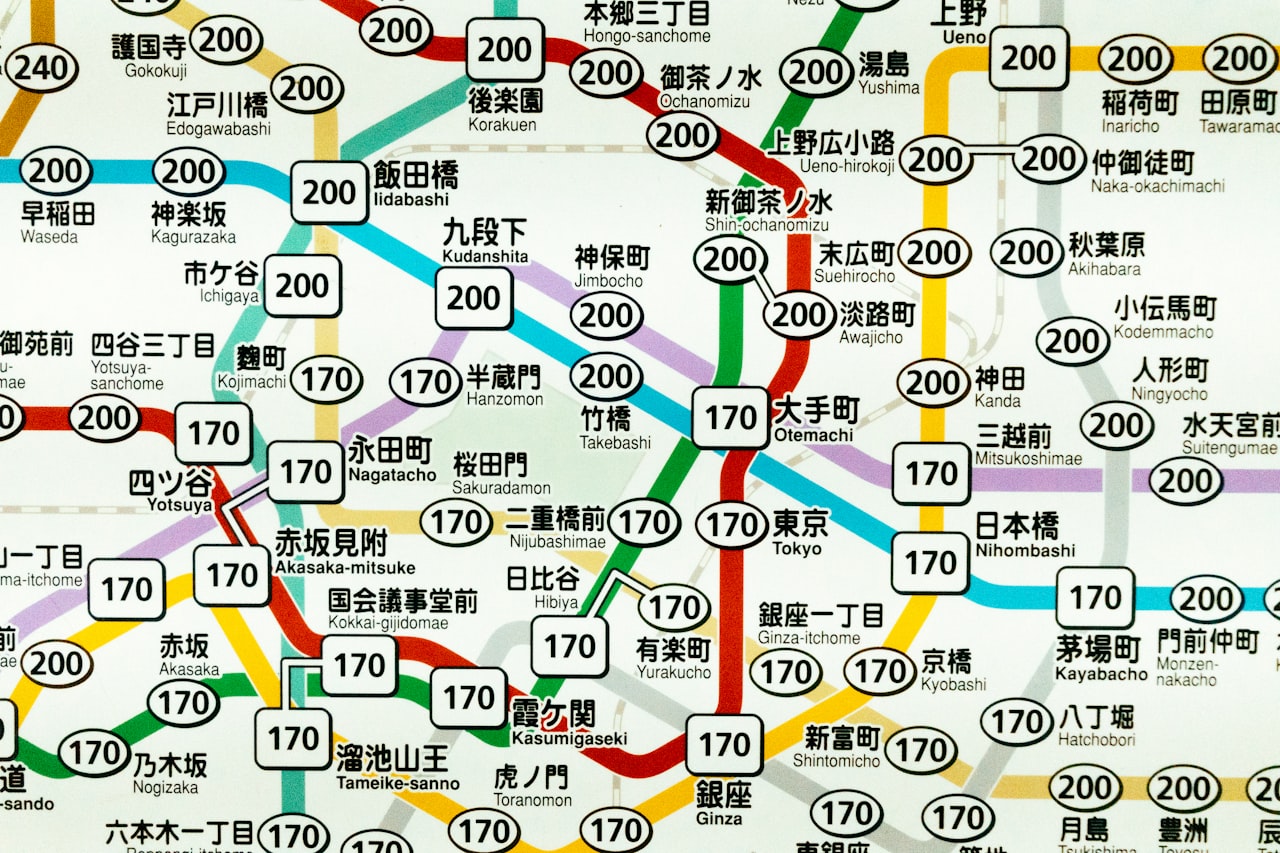
Train maps in Japan can look complex at first, but they follow a logical color-coded system. Each train line is assigned a color and a letter code (e.g., the Tokyo Yamanote Line is green, coded “JY”). Stations are numbered along each line (e.g., JY01, JY02…), which makes navigation easy even if you can’t read Japanese.
Useful apps for navigating trains:
- Google Maps – Works great in Japan for train directions, including fare and time estimates.
- Hyperdia – A detailed Japan-specific timetable and route planner.
- Japan Official Travel App – Provided by the Japan Tourism Agency.
🚪 Boarding the Train
Once you’ve gone through the ticket gate, follow these steps to board your train:
- Find the right platform. Look for signs showing the line name and direction (e.g., “Yamanote Line – Shibuya direction”).
- Line up at the marked queue zones. Yellow painted lines on the platform show where doors will open. Stand in line and wait.
- Let passengers exit first. Always let people off before you board — this is essential train etiquette in Japan.
- Check the destination board. Electronic screens inside and above the train display the current station and next stops in both Japanese and English.
- Exit at your stop. Tap your IC card (or insert your paper ticket) at the exit gate.
🔄 How to Transfer Between Trains
Transferring between trains is one of the most common tasks in Japan, and it’s easier than it looks. Here’s what you need to know:
- Within the same fare zone (IC card): Simply walk to the other platform and tap out at the final exit. You are charged based on total distance, not the number of trains you take.
- Between different operators (e.g., JR → Subway): You must exit through the ticket gates, then re-enter through the new operator’s gates. Both entry and exit are automatically handled by your IC card.
- Directional signs: Every major station has clear color-coded signs indicating platforms, exit numbers, and connecting lines — many in English.
- Connection time: Allow at least 5–10 minutes for transfers at large stations like Shinjuku, Shibuya, or Osaka. Google Maps will include transfer walking time in its directions.
🚄 Limited Express Trains (特急 Tokkyū)
In addition to regular local and rapid trains, Japan has Limited Express trains (特急, tokkyū) — faster intercity services that stop only at major stations. These are different from the Shinkansen and typically require an additional limited express fee on top of the base fare.
Common limited express trains tourists use:
- Narita Express (N’EX) – Connects Narita Airport to Tokyo, Shinjuku, Yokohama. Requires a reserved seat and limited express ticket. A great deal with the N’EX Round-Trip Ticket for tourists (approx. ¥4,000).
- Romancecar (Odakyu) – Scenic limited express to Hakone from Shinjuku.
- Wide View Hida / Azusa – Scenic trains to Takayama and Matsumoto.
- Thunderbird – Links Osaka/Kyoto to Kanazawa (Hokuriku region).
⚠️ Important: Seat reservations are usually required or strongly recommended on limited express trains, especially during peak season. Check in advance and book through JR ticket counters, vending machines, or online via Smart EX.
🎌 Should You Get a JR Pass?
The Japan Rail Pass (JR Pass) is a special rail pass available exclusively to foreign tourists. It provides unlimited rides on most JR trains — including the Shinkansen — for a set number of days (7, 14, or 21 days).
Is the JR Pass Worth It?
It depends on your itinerary. The JR Pass is worth it if you plan to travel between multiple cities (e.g., Tokyo → Kyoto → Osaka → Hiroshima). For a trip focused on a single city like Tokyo, an IC card alone is usually sufficient.
| JR Pass Type | Price (approx.) | Best For |
|---|---|---|
| 7-Day Pass | ¥50,000 | Short multi-city trip |
| 14-Day Pass | ¥80,000 | 2-week Japan tour |
| 21-Day Pass | ¥100,000 | Extended exploration |
💡 Tip: Purchase the JR Pass before you arrive in Japan — it’s significantly cheaper when bought overseas. 👉 Buy the JR Pass on Klook (best price + instant voucher)
⚠️ JR Pass Limitation: The JR Pass does NOT cover Nozomi and Mizuho Shinkansen trains (the fastest services on the Tokaido/Sanyo line). Use Hikari or Sakura trains instead, which are only slightly slower.
🚅 Riding the Shinkansen (Bullet Train)
The Shinkansen is one of Japan’s most iconic experiences — and one of the fastest trains in the world, reaching speeds of up to 320 km/h (200 mph). Here’s what you need to know:
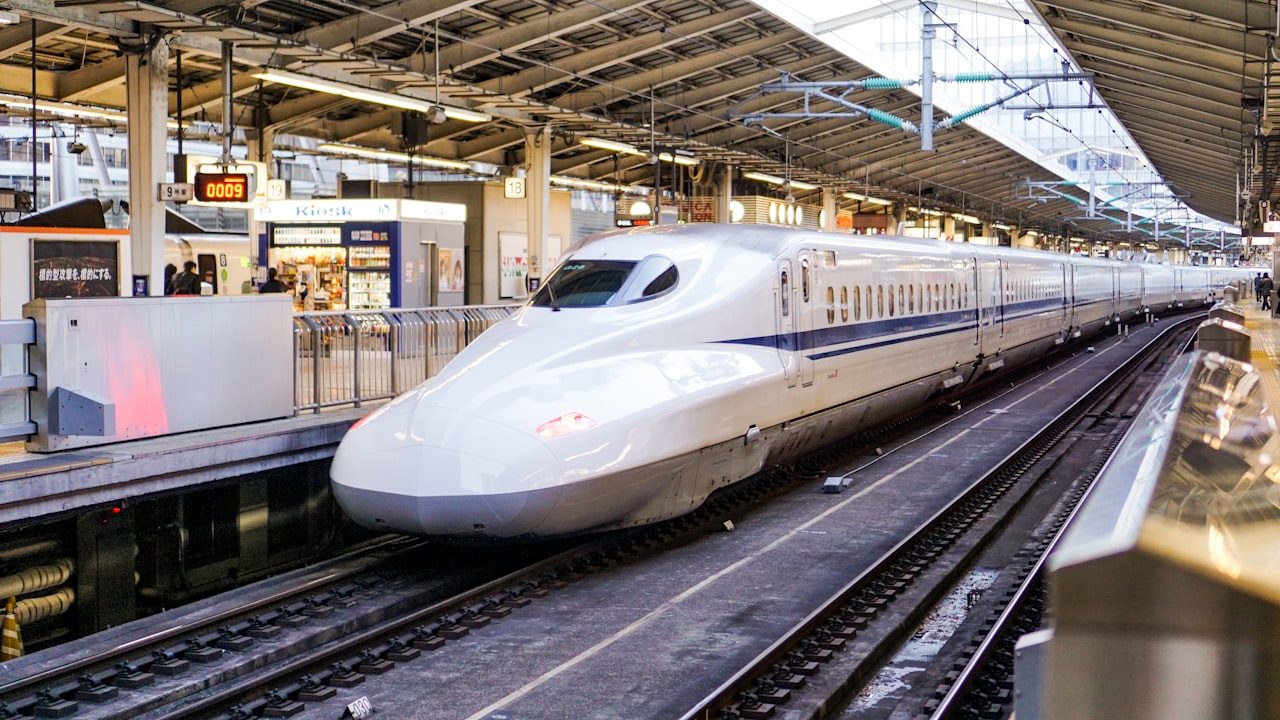
Shinkansen train categories (Tokaido/Sanyo line):
- Nozomi – Fastest, fewest stops. Not covered by JR Pass.
- Hikari – Fast, stops at major cities (Nagoya, Kyoto, Shin-Osaka). JR Pass valid.
- Kodama – Slowest, stops at all stations. JR Pass valid.
Seat classes:
- Ordinary (普通車) – Standard comfortable seating, rows of 3+2.
- Green Car (グリーン車) – Business class equivalent, rows of 2+2, more legroom. Requires an additional Green Car ticket.
- Gran Class – First class on select routes (Tohoku/Hokuriku). Includes meals and amenities.
- Reserved vs. Unreserved seats: Most Shinkansen trains have both. With a JR Pass, you can ride unreserved for free or reserve a seat for a small fee. Without a JR Pass, you’ll pay per ticket.
- Be on time: The Shinkansen is famously punctual — average delays are less than 1 minute. Arrive at the platform a few minutes early.
- Luggage: Large suitcases (over 160cm in total dimensions) must be stored in a designated luggage space behind the last-row seats — book a “oversized baggage” seat (特大荷物スペース付き座席) in advance (free with JR Pass).
- Food and drinks: Unlike regular trains, eating on the Shinkansen is perfectly fine! Grab an ekiben (station bento box) and enjoy the scenery.
How to Reserve a Shinkansen Seat
Reserving a seat is recommended during busy periods (Golden Week, New Year, etc.):
- Midori no Madoguchi (JR Green Windows): Staffed counters at major JR stations — most reliable, staff often speak basic English.
- Ticket vending machines (指定席券売機): Self-service machines with English interface at most Shinkansen stations.
- Smart EX / Shinkansen eTicket (online): For Tokaido/Sanyo Shinkansen, book at smart-ex.jp using a credit card and IC card.
- With a JR Pass: Seat reservations are free or low cost. Reserve at any JR service counter or designated machine.
🧳 Luggage Delivery Service (Takkyubin)
Carrying large suitcases on crowded Japanese trains can be stressful — especially on the Shinkansen or through busy transfer stations. Japan’s luggage delivery service (takkyubin / 宅急便) is the perfect solution.
You can send your luggage ahead to your next hotel, and it will typically arrive the next day. Cost is around ¥1,500–¥2,500 per bag depending on size and distance.
- Go to a convenience store (7-Eleven, FamilyMart, Lawson) or your hotel’s front desk.
- Fill out a delivery slip with your destination hotel’s address and your check-in date.
- Pay the delivery fee and receive a tracking receipt.
- Travel light to your next destination — your luggage will be waiting at the hotel!
💡 Pro tip: If you’re moving from city to city (e.g., Tokyo → Kyoto → Osaka), sending your bags ahead the night before means you can explore hands-free on travel days.
⏰ Rush Hours & When to Avoid Trains
Japanese trains — especially in Tokyo and Osaka — are notorious for extreme crowding during rush hour. Unless you enjoy being packed like sardines, try to avoid:
- Morning rush: 7:30 AM – 9:30 AM (worst: 8:00–9:00 AM)
- Evening rush: 5:30 PM – 8:00 PM
If your schedule is flexible, aim to travel between 10:00 AM and 4:00 PM for the most comfortable experience. On weekends and public holidays, rush hour is significantly lighter.
⚠️ Peak travel seasons to plan for: Train seats and passes sell out during Golden Week (late April – early May), Obon (mid-August), and New Year (late December – early January). Book Shinkansen reservations well in advance during these periods.
🙏 Train Etiquette in Japan
Japanese trains are clean, quiet, and orderly — visitors are expected to follow a few important rules:
- 📵 Silence your phone and set it to manner mode.
- 🚫 No phone calls on the train — step off at a station if you need to talk.
- 🎧 Keep music and videos low — use headphones and keep the volume down.
- 🪑 Give up priority seats to elderly, pregnant, or disabled passengers.
- 🚶 Don’t eat on local trains — acceptable on long-distance trains but not on city trains.
- 👜 Mind your bag — take off your backpack and hold it in front of you when the train is crowded.
❓ FAQ
Do Japanese trains have English announcements?
Yes! Most trains in major cities and tourist areas announce stations in both Japanese and English. Signs inside trains also display station names in Roman letters (romaji).
What if I get on the wrong train?
Simply get off at the next station and take a train in the opposite direction. If you used an IC card, there is no extra charge.
Are trains in Japan expensive?
Local subway and city train rides are quite affordable — typically 170 to 300 yen per ride. Long-distance trains and the Shinkansen are more expensive, which is where the JR Pass can save you money.
Can I use Google Maps for trains in Japan?
Absolutely. Google Maps is highly accurate for Japanese trains and will show you the exact platform, transfer instructions, fare, and travel time.
Do trains run 24 hours?
No — most trains in Japan stop running around midnight and resume service around 5:00 to 6:00 AM. Plan your late nights accordingly, or budget for a taxi.
How do I get from the airport to central Tokyo by train?
From Narita Airport: Take the Narita Express (N’EX) to Tokyo Station (approx. 60 min, ¥3,070 one-way). Budget option: Keisei Skyliner to Ueno/Nippori (approx. 41 min, ¥2,570).
From Haneda Airport: Take the Keikyu Line or Tokyo Monorail to central Tokyo (approx. 30 min, ¥600–¥700). Both accept IC cards.
Now you’re ready to ride the trains in Japan like a pro! For more travel tips, check out our guide on How to Use IC Cards in Japan (Suica and Pasmo).
📚 More Japan Travel Guides
Ready to explore more of Japan? These guides will help you plan every aspect of your trip:
- 🃏 How to Use IC Cards in Japan: Suica & Pasmo Complete Guide
- 📱 Best Apps for Traveling Japan: The Complete 2026 Guide
- 💰 Japan Travel Budget 2026: How Much Does a Trip Cost?
- 🗓️ 10-Day Japan Itinerary: The Ultimate First-Timer’s Guide
- 🌐 Japan eSIM Guide 2026: Best Plans & Providers
- 🏛️ Japan Etiquette Guide 2026: Essential Dos & Don’ts

コメント