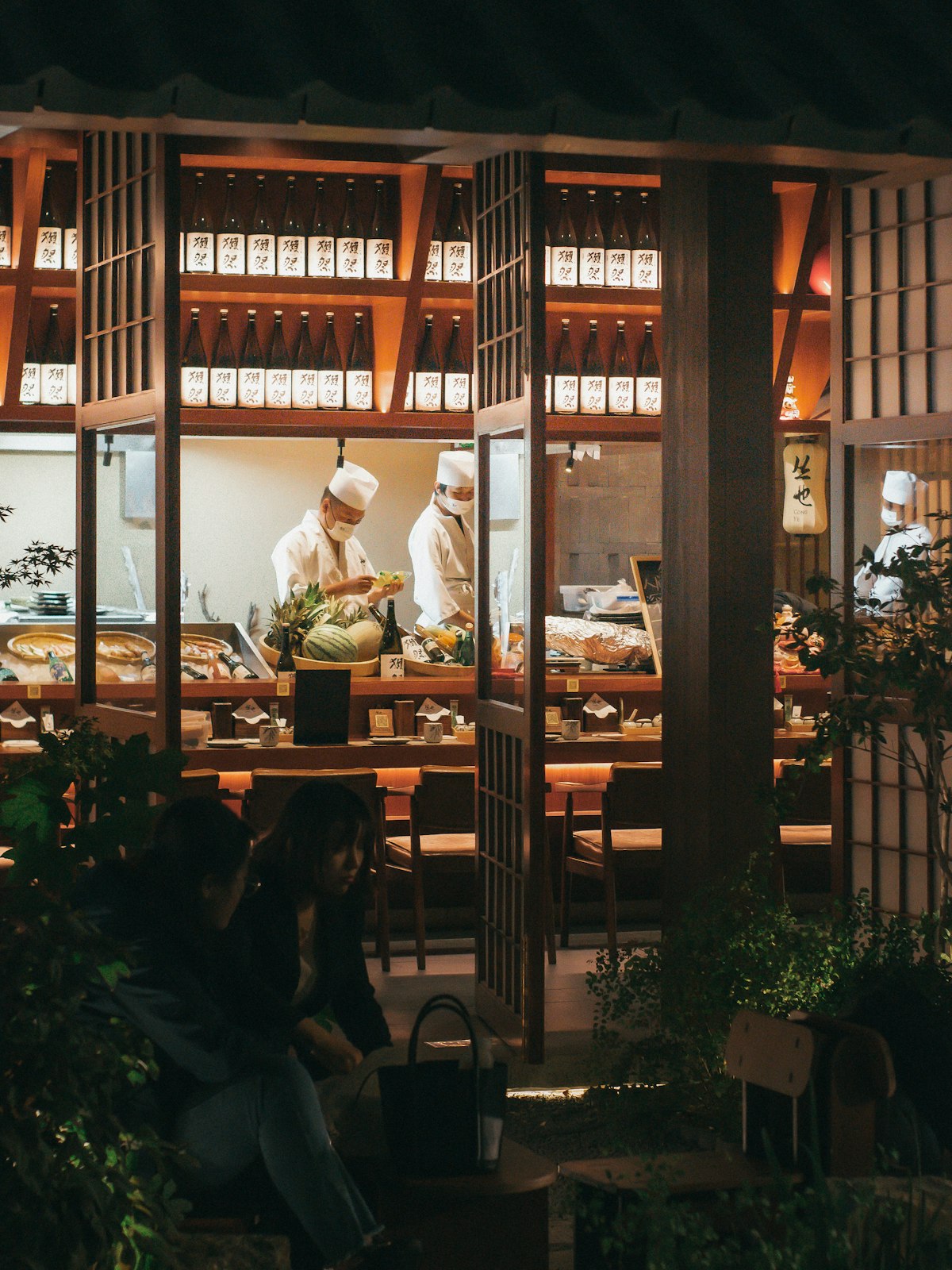
Japan’s cuisine is as diverse as it is delicious — every meal is an experience. Photo: Unsplash
If there is one thing that almost every traveler to Japan agrees on, it is this: the food alone is worth the trip. Japan boasts more Michelin-starred restaurants than any other country in the world — Tokyo alone holds more stars than Paris or New York — yet you can eat some of the most extraordinary meals of your life standing at a street stall for just a few dollars.
Japanese cuisine is built on a philosophy of shokunin (craftsperson spirit): the relentless pursuit of perfection in a single discipline. The ramen chef who has spent 30 years perfecting one bowl of broth. The sushi master who trains for a decade before being allowed to season the rice. This dedication to craft is what makes eating in Japan such a transcendent experience.
Whether you have two weeks or just a few days, this comprehensive Japan food guide will walk you through 25+ must-try dishes, regional specialties city by city, practical dining tips, and everything you need to eat your way through Japan like a local.
Why Japan Is a Food Lover’s Paradise
Japan’s culinary reputation is no accident. For centuries, the country’s geography — surrounded by ocean, crossed by mountains, spanning from subtropical Okinawa to subarctic Hokkaido — created an extraordinary diversity of ingredients and cooking styles. Add to that a cultural emphasis on seasonal eating (shun), respect for ingredients, and a spirit of continuous improvement, and you have the foundations of one of the world’s great food cultures.
UNESCO recognized washoku (traditional Japanese cuisine) as an Intangible Cultural Heritage in 2013, noting its emphasis on freshness, balance, and the beauty of presentation.
Tokyo has over 160,000 restaurants — more than any other city on earth.
Japan has 400+ Michelin-starred restaurants, the most of any country globally.
The average Japanese person visits a restaurant or food stall 4–5 times per week.
The Basics of Japanese Cuisine
Umami — The Fifth Taste
Japanese cuisine is arguably responsible for introducing the world to umami — the savory, deeply satisfying fifth taste discovered by Japanese chemist Kikunae Ikeda in 1908. Umami is present in ingredients like dashi (broth made from kombu seaweed and bonito flakes), soy sauce, miso, and mushrooms.
Seasonal Eating (Shun)
The concept of shun refers to eating ingredients at their seasonal peak. Japanese cuisine is deeply tied to the four seasons: spring brings bamboo shoots and cherry blossom-flavored sweets; summer offers cold soba and grilled eel; autumn is the time for matsutake mushrooms; winter means hot pot dishes and warming ramen.
The Ichiju Sansai Principle
Traditional Japanese meals follow an ichiju sansai structure: one soup and three side dishes accompanying a bowl of rice. This creates a balanced meal with contrasting flavors and textures.
The Role of Rice
Rice (gohan) is not just a side dish in Japan — it is the center of the meal. Japanese short-grain rice has a distinct sticky texture and slightly sweet flavor. Never pour soy sauce directly onto white rice in a traditional setting — it is considered poor taste.
25+ Must-Try Japanese Dishes
1. Ramen
No food in Japan generates more passion than ramen. These wheat-noodle soups come in four main regional styles: shoyu (soy sauce-based, Tokyo style), shio (salt-based, light and clear), miso (rich and hearty, from Hokkaido), and tonkotsu (pork bone broth, creamy and intense, from Fukuoka). Each region has its own variations — Kyoto ramen tends toward a light chicken-soy base, while Sapporo ramen is thick with miso and topped with butter and corn.
A great bowl of ramen involves the interplay of tare (concentrated seasoning), rich broth, perfectly chewy noodles, and toppings like chashu (braised pork belly), soft-boiled marinated egg (ajitsuke tamago), bamboo shoots, and nori. Expect to pay ¥800–¥1,500 for an excellent bowl.

A bowl of ramen — Japan’s most beloved comfort food. Photo: Unsplash
🎌 Want to try making ramen yourself? Book a Ramen Masterclass in Tokyo on Klook →
2. Sushi
Sushi in Japan is nothing like the California rolls you may know from back home. At its most refined, sushi is an exercise in minimalism: the finest seasonal fish, seasoned rice (shari) prepared with red rice vinegar, and nothing else standing between you and the ingredient. The two main styles are nigiri (hand-pressed rice topped with fish) and maki (rolled in nori seaweed).
For first-timers, a kaiten-zushi (conveyor belt sushi) restaurant is a fun and affordable introduction — plates start from around ¥110. For a more serious experience, visit a neighborhood sushiya and order the omakase (chef’s selection) — even mid-range omakase at ¥3,000–¥8,000 will outclass most sushi anywhere else in the world.

Fresh sashimi and sushi — the pinnacle of Japanese seafood cuisine. Photo: Unsplash
🎌 Book a Sushi Making Class in Tokyo: No.1 Sushi Making Class in Asakusa on Klook →
3. Sashimi
Sashimi is simply the freshest raw fish or seafood, sliced and served without rice. It is the purest expression of ingredient quality in Japanese cuisine. Common varieties include maguro (tuna), sake (salmon), hamachi (yellowtail), tako (octopus), and hotate (scallop). Eat sashimi at the freshest seafood markets — like Tokyo’s Toyosu Market area or Osaka’s Kuromon Market — for the ultimate experience.

Fresh sashimi — the pinnacle of Japanese seafood cuisine. Photo: Unsplash
4. Tempura
The art of tempura is deceptively simple: seafood or vegetables dipped in an ice-cold, lightly mixed batter and fried in clean oil at precisely the right temperature. The result should be incredibly light, almost translucent, with a delicate crunch that gives way to the fresh flavor of whatever is inside. Ebi (shrimp) tempura is the classic, but seasonal vegetables like sweet potato, eggplant, and shiso leaf are often the most memorable. Dip lightly in the accompanying tentsuyu sauce and eat immediately.
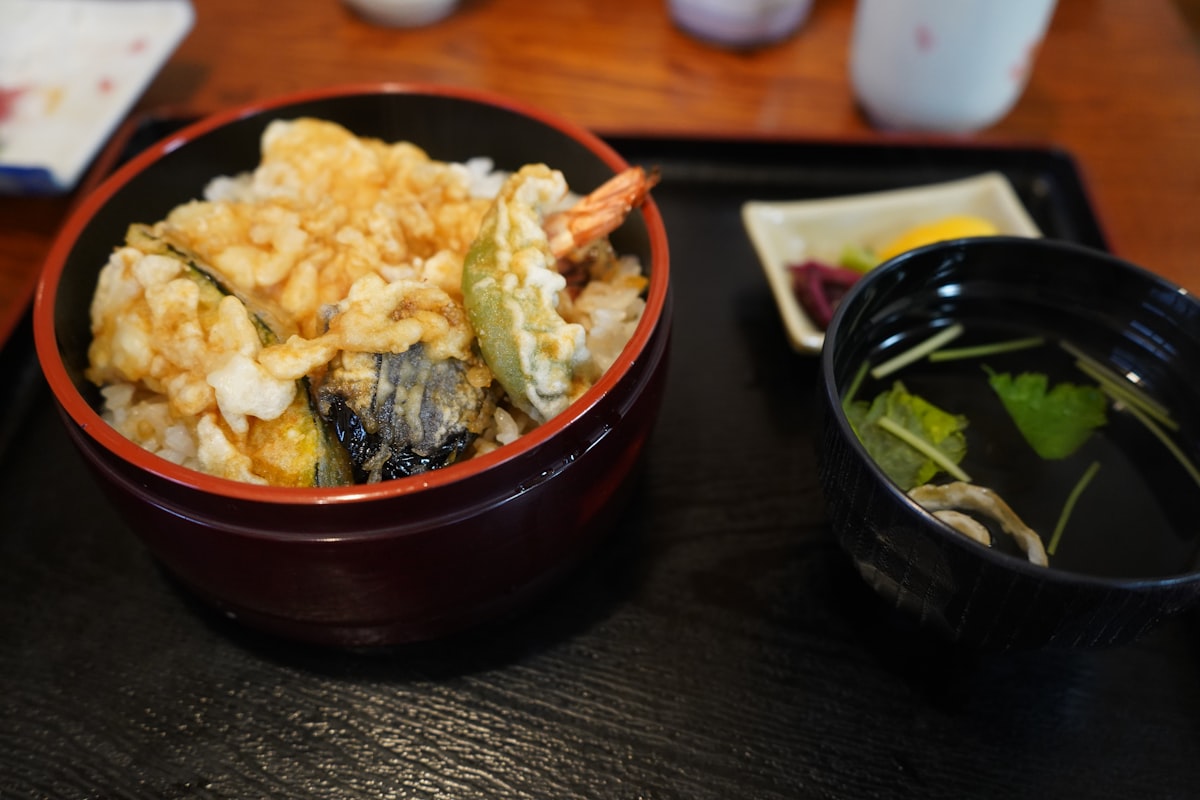
Tempura don — crispy tempura served over steamed rice, a beloved Japanese lunch. Photo: Unsplash
5. Tonkatsu
A thick pork cutlet (katsu) breaded in panko breadcrumbs and deep-fried to golden perfection, served with shredded cabbage, rice, miso soup, and tangy tonkatsu sauce. This is Japanese comfort food at its finest. High-end tonkatsu restaurants use premium branded pork (like Kurobuta black pig) that is extraordinarily tender and flavorful. Budget ¥1,000–¥3,000 for a quality tonkatsu set meal.
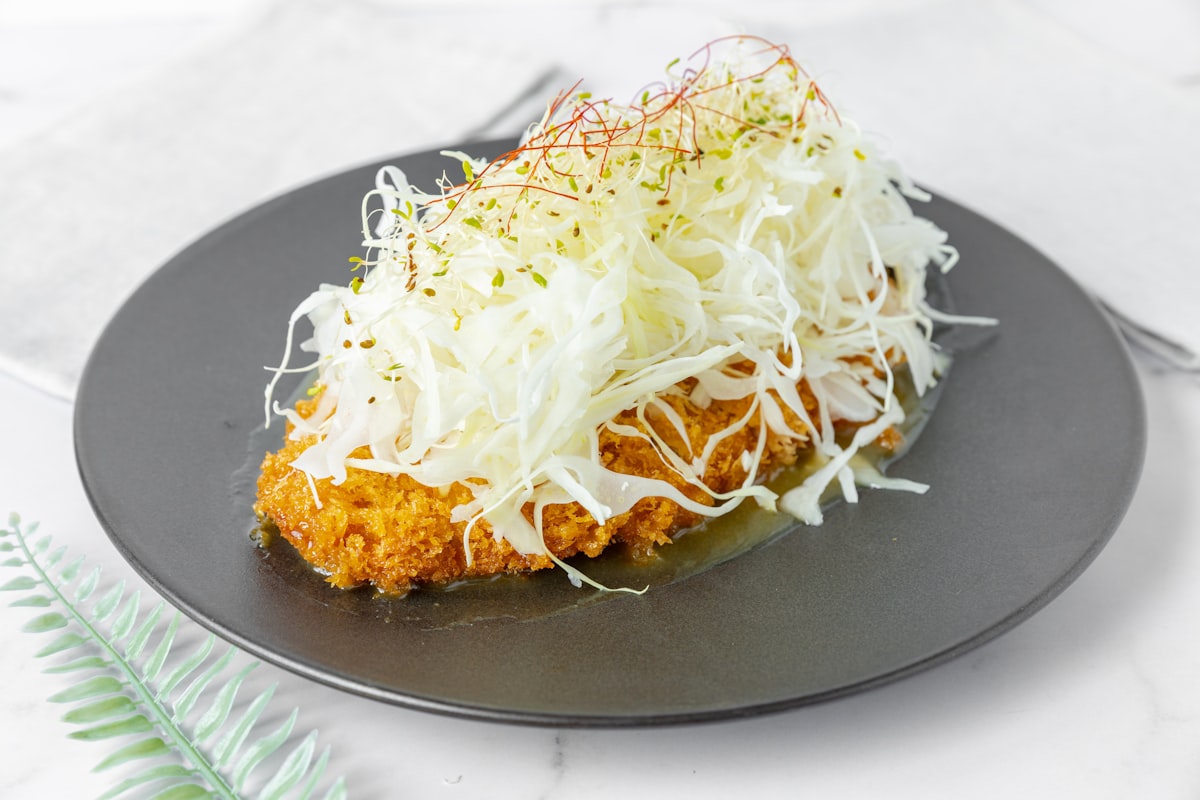
Tonkatsu — panko-breaded pork cutlet, Japan’s ultimate comfort food. Photo: Unsplash
6. Yakitori
Chicken skewers grilled over charcoal. That description does not do yakitori justice. At a proper yakitori restaurant, almost every part of the chicken is used — not just breast and thigh, but liver (kimo), heart (hatsu), cartilage (nankotsu), skin (kawa), and tail (bonjiri). Each skewer is seasoned either with tare (sweet soy glaze) or just salt (shio). Yakitori joints under train tracks in Tokyo’s Yurakucho or Shinjuku are quintessential Japan experiences — order everything.
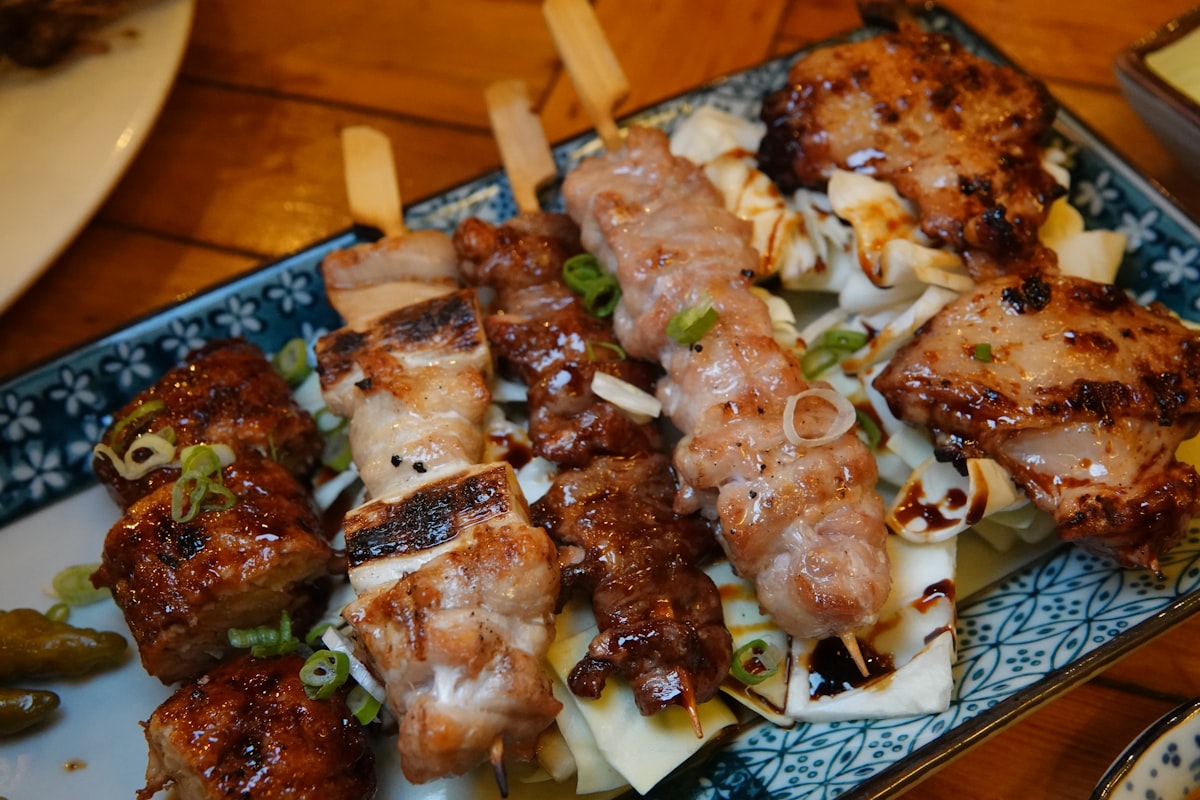
Yakitori grilled over charcoal — a quintessential Japanese izakaya experience. Photo: Unsplash
7. Takoyaki
Osaka’s most beloved street food: golf ball-sized balls of savory batter filled with pieces of octopus (tako), pickled ginger, and spring onion, cooked in a special iron mold and served piping hot with mayonnaise, takoyaki sauce, bonito flakes, and dried seaweed powder. The bonito flakes wave in the steam like tiny orange dancers. Available for ¥500–¥700 for 6–8 pieces throughout Osaka’s Dotonbori area.

Takoyaki sizzling on a copper griddle — the soulful heart of Osaka’s street food culture. Photo: Unsplash
8. Okonomiyaki
Often described as a “Japanese savory pancake,” okonomiyaki is a thick batter mixed with shredded cabbage and your choice of ingredients (pork, seafood, cheese, mochi, or corn), cooked on a flat iron griddle, then topped with sweet-savory sauce, Japanese mayonnaise, bonito flakes, and aonori. In most Osaka-style restaurants, you cook it yourself on a tabletop griddle. Hiroshima-style is layered like a crepe cake with noodles inside. Try both.
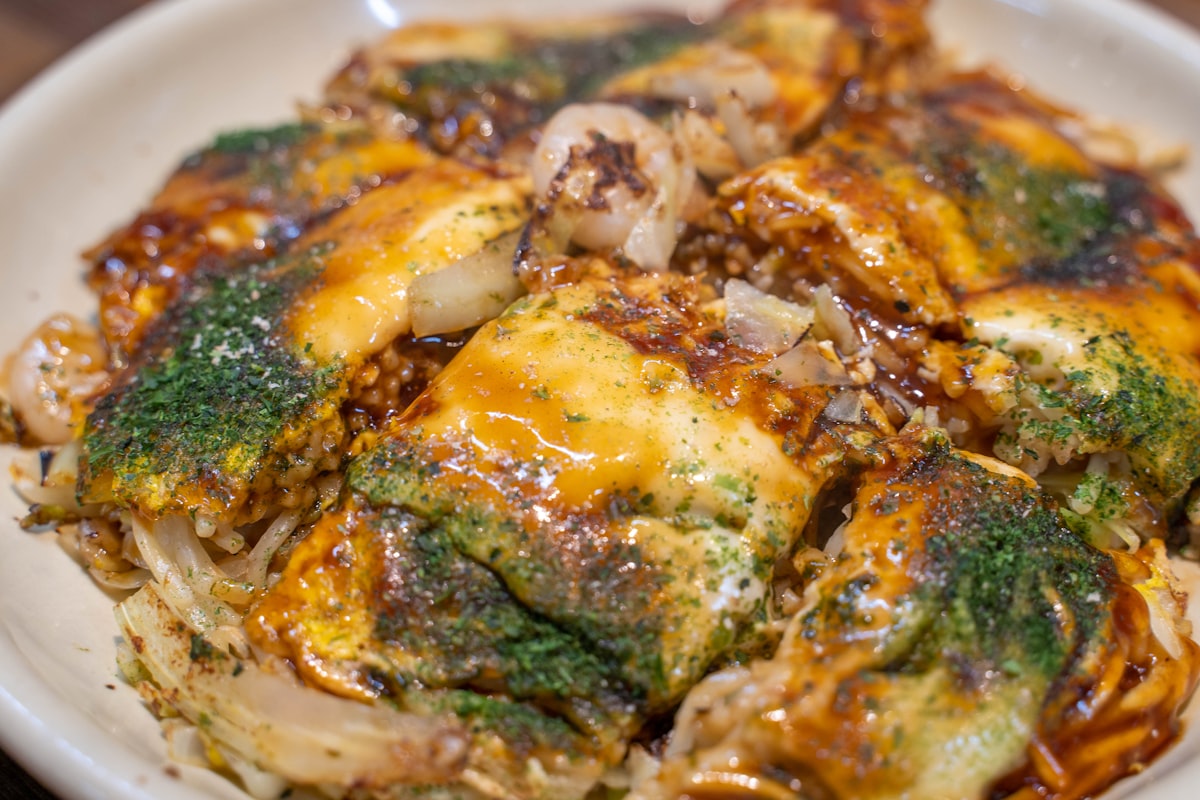
Okonomiyaki — Osaka’s beloved savory pancake, topped with bonito flakes that dance in the heat. Photo: Unsplash
9. Gyoza
Japan’s pan-fried dumplings differ from their Chinese counterparts in having thinner skin, more garlic, and a distinctively crispy bottom achieved by adding water to the pan and steaming-frying simultaneously. A perfectly made gyoza has a paper-thin wrapper that is crispy on the bottom and silky on top, filled with pork, cabbage, and garlic chives. Dip in a mix of soy sauce and rice vinegar with chili oil (ra-yu). Ramen-ya often also serve excellent gyoza — order a plate alongside your bowl.
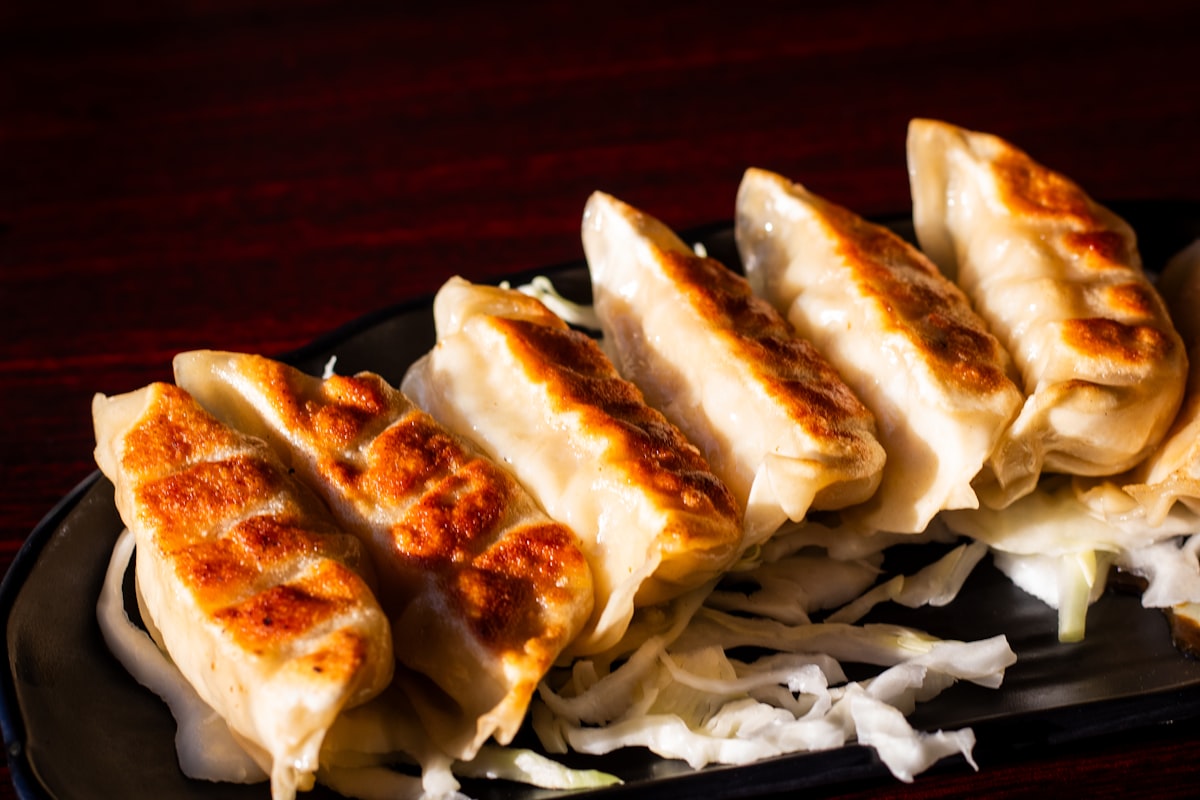
Gyoza — crispy-bottomed Japanese dumplings, best dipped in soy sauce with chili oil. Photo: Unsplash
10. Udon
Thick, chewy wheat noodles in a delicate dashi-based broth. Udon is deeply comforting and extraordinarily versatile. Kake udon is the simplest form — just noodles in hot broth with a few toppings. Tempura udon adds crispy tempura on top. Kitsune udon features a sweet-simmered fried tofu pouch. Kagawa Prefecture is considered the spiritual home of udon — a bowl there can cost as little as ¥300.

Freshly made udon noodles — a simple yet soul-satisfying Japanese staple. Photo: Unsplash
11. Soba
Thin, nutty buckwheat noodles with a slightly earthy flavor. Great soba is served cold (zarusoba) with a dipping broth of dashi, soy sauce, and mirin, garnished with wasabi and sliced spring onions. The highest quality soba is made fresh daily from buckwheat that is stone-ground in-house — the flavor is utterly different from dried soba. In soba tradition, it is polite to slurp loudly — it cools the noodles and is a sign of appreciation.
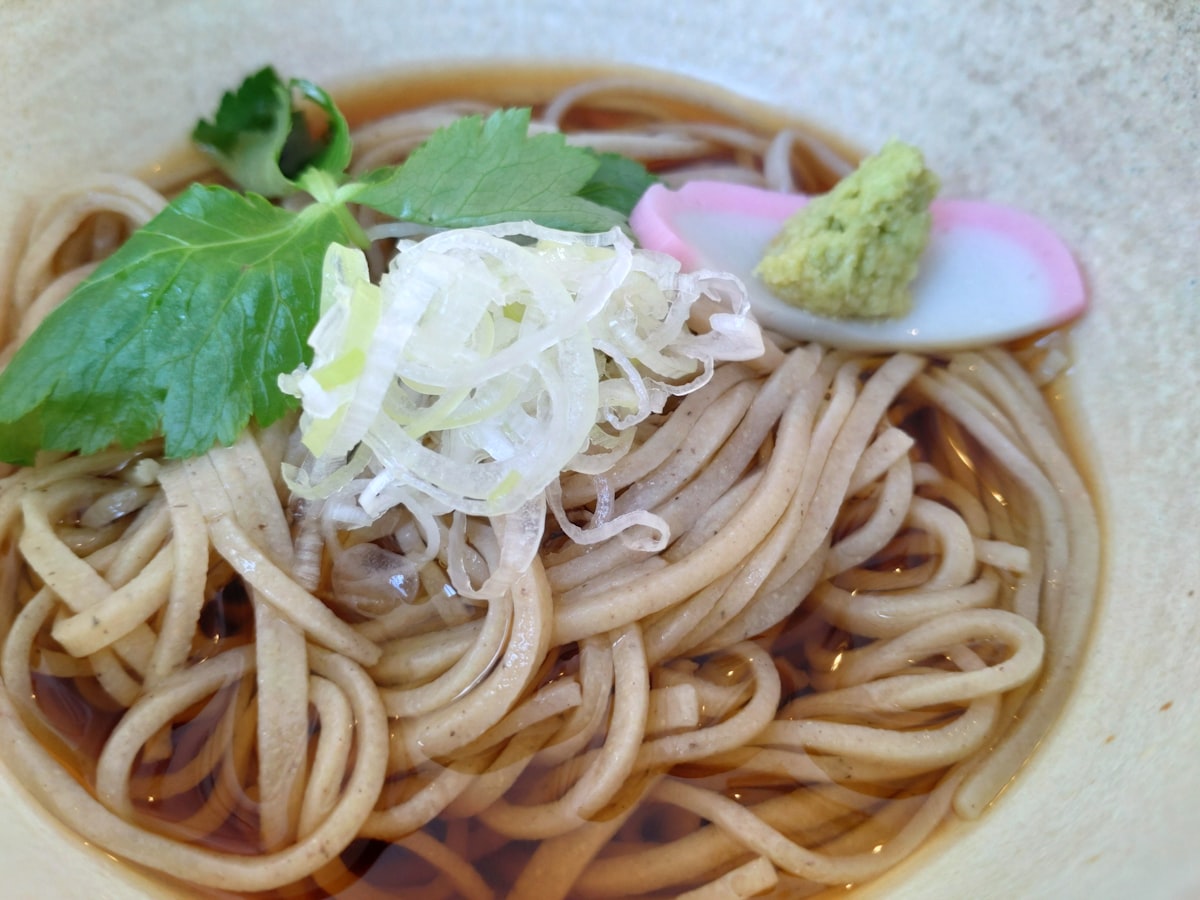
Soba — earthy buckwheat noodles served in a delicate dashi broth with wasabi. Photo: Unsplash
12. Karaage
Japanese fried chicken marinated in soy sauce, sake, and ginger, then double-fried in potato starch for an extra-crispy crust. Served with a wedge of lemon and kewpie mayonnaise. Karaage is one of Japan’s great pleasures — juicy, deeply flavorful, and dangerously addictive.
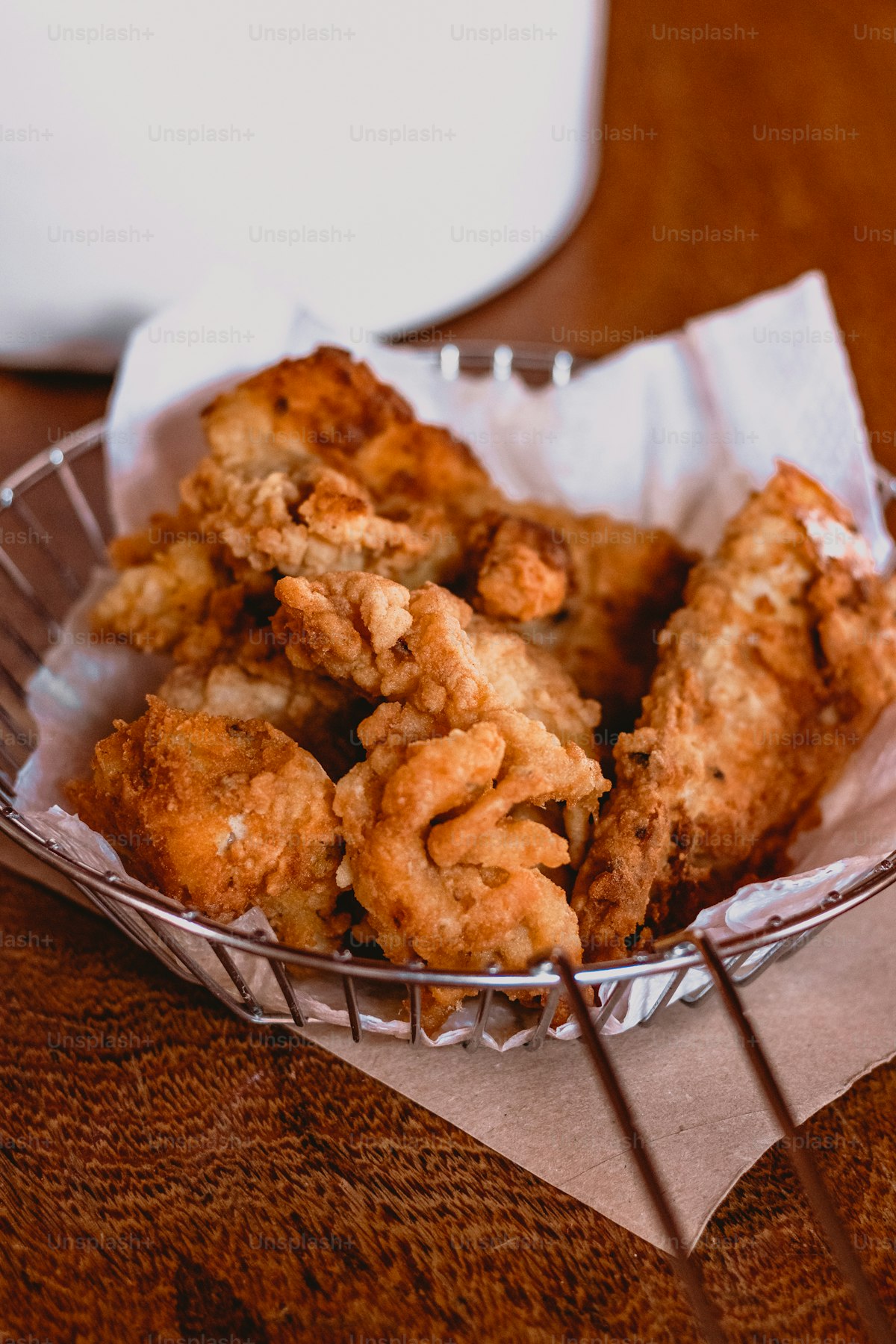
Karaage — Japan’s irresistible double-fried chicken, juicy inside and perfectly crispy outside. Photo: Unsplash
13. Shabu-Shabu
A hot pot dish in which paper-thin slices of beef are swished through simmering dashi broth at your table until just cooked — about three seconds for premium wagyu. Dip in ponzu (citrus soy) or goma dare (sesame sauce) and eat with vegetables cooked in the same pot. The broth, enriched by the end of the meal, is finished with noodles or rice. A quintessential winter experience.
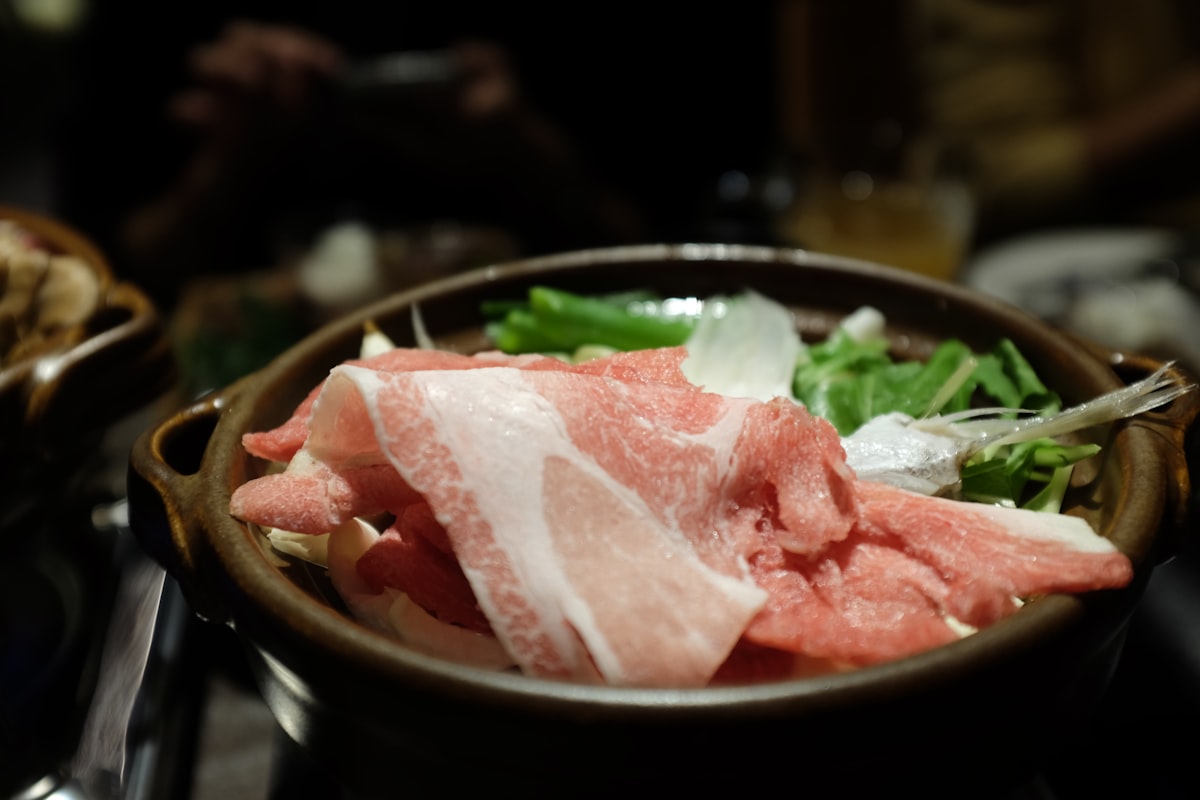
Shabu-shabu — delicate wagyu slices swished through a bubbling dashi broth. Photo: Unsplash
14. Wagyu Beef
Japanese wagyu beef — particularly from Kobe, Matsusaka, or Ohmi — represents perhaps the pinnacle of what beef can be. The extraordinary marbling (fat distributed evenly throughout the muscle) creates a texture that melts on the tongue at body temperature. A true wagyu experience — whether as teppanyaki, sukiyaki, or premium yakiniku — is expensive but genuinely unforgettable.
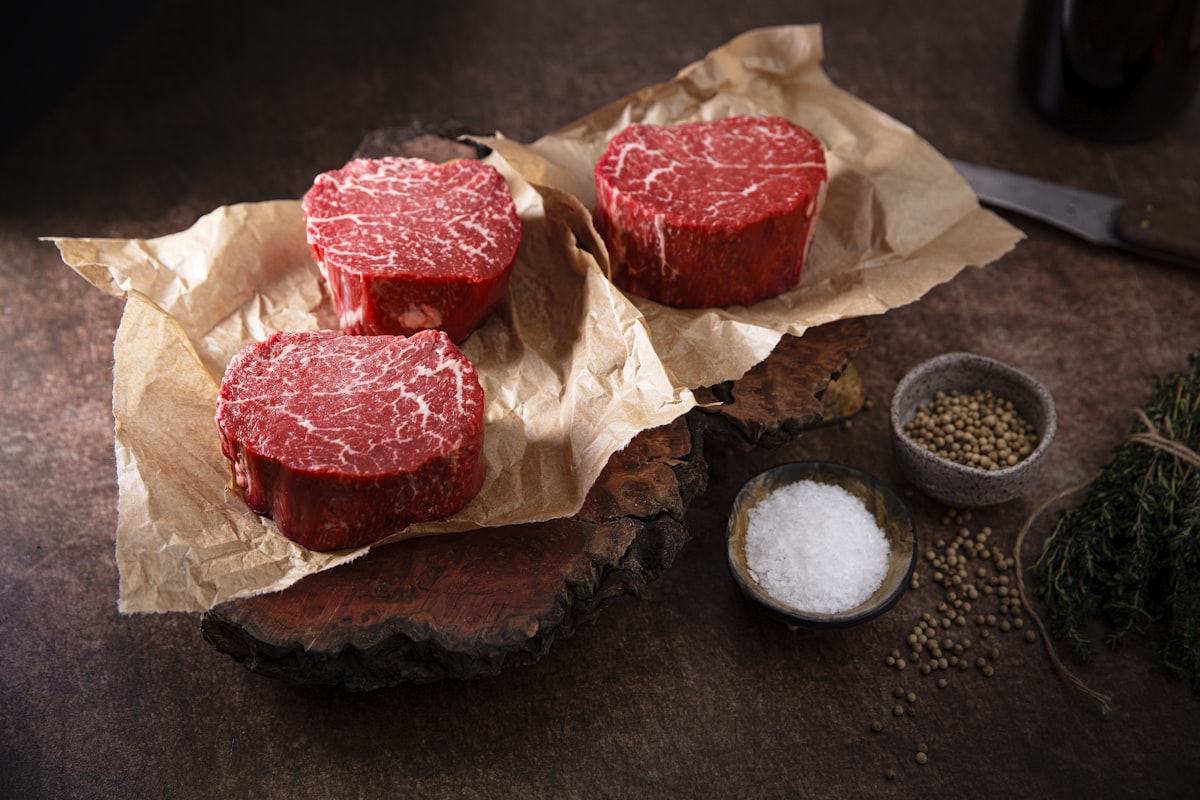
Japanese wagyu — the extraordinary marbling creates a texture that melts at body temperature. Photo: Unsplash
15. Onigiri
The humble rice ball is Japan’s greatest portable food and a masterpiece of simplicity. A triangular or oval ball of seasoned rice wrapped in nori, filled with a single ingredient — pickled plum (umeboshi), grilled salmon, tuna mayo, salted kelp, or seasoned cod roe. The convenience store onigiri in Japan — especially from 7-Eleven or Lawson — is exceptional and costs only ¥100–¥200. Never leave Japan without eating at least five of these.
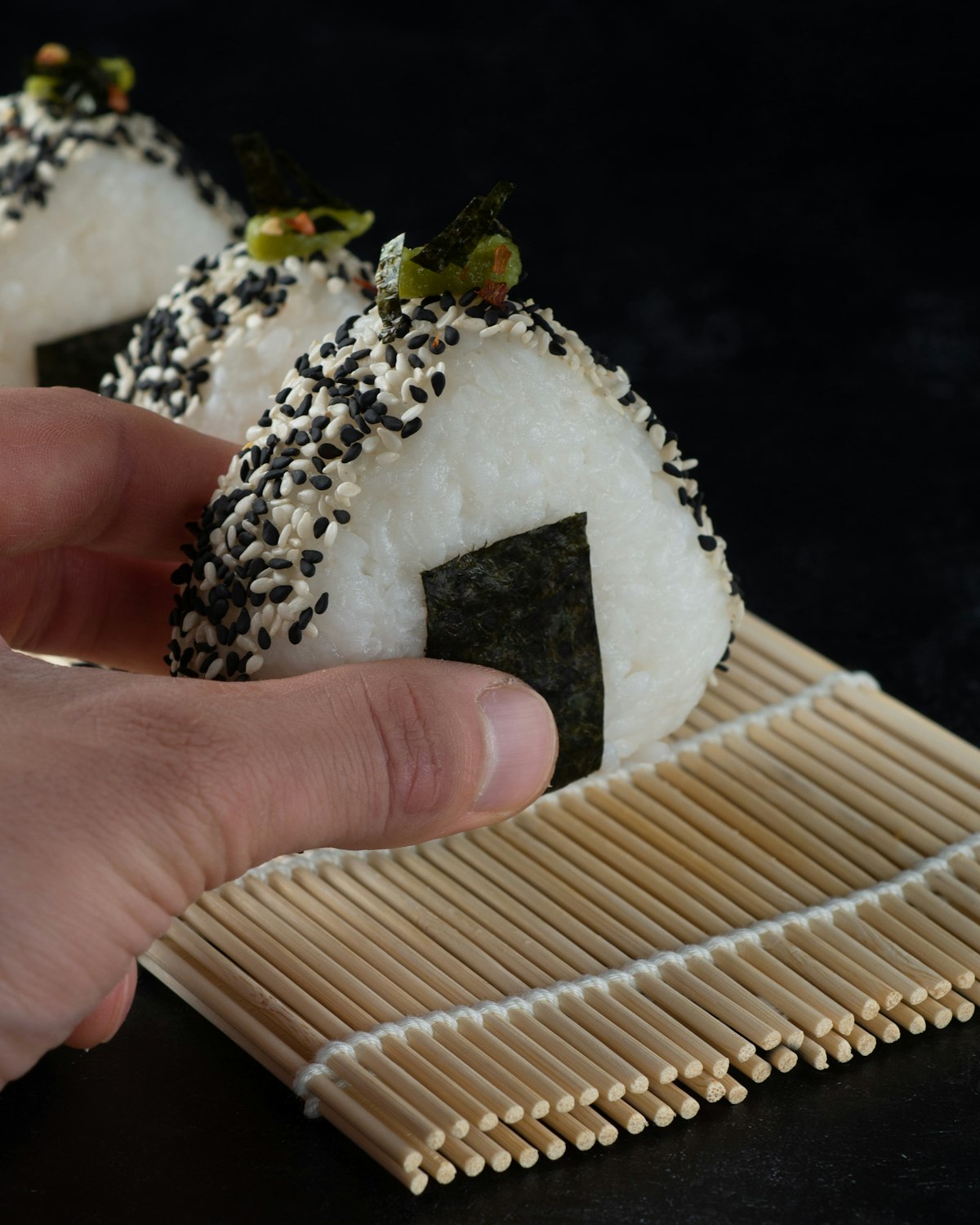
Onigiri — Japan’s perfect portable food. Simple, satisfying, and sold in every convenience store. Photo: Unsplash
16. Miso Soup
Do not overlook miso soup. What is often treated as an afterthought outside Japan is, at its finest, a complex, nourishing broth. The flavor varies dramatically depending on the type of miso used (white shiro, red aka, or blended awase), the dashi base, and the seasonal additions — clams in spring, winter melon in summer, tofu and wakame year-round. A great miso soup is liquid umami.
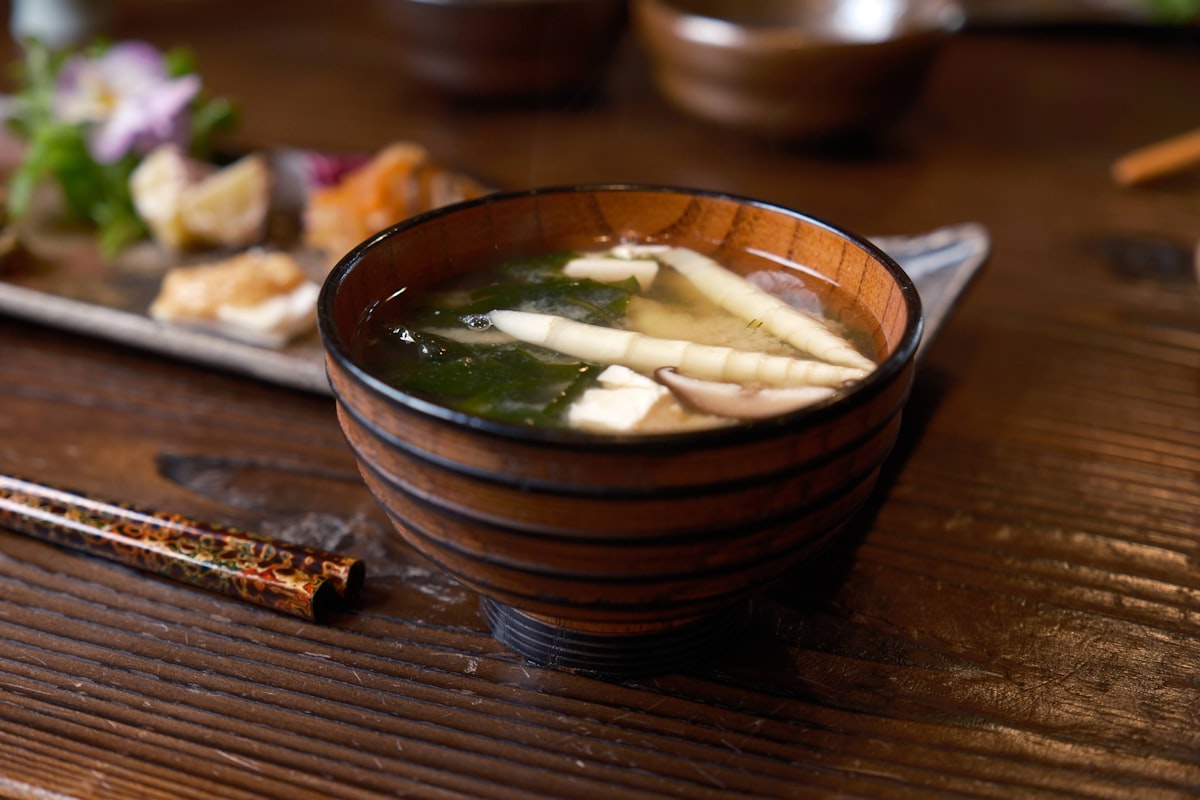
Miso soup — Japan’s soul-warming daily ritual, a perfect balance of umami and nourishment. Photo: Unsplash
17. Tamago Gohan (TKG)
Known as Tamago Kake Gohan (TKG) — raw egg on hot rice with soy sauce — this is a beloved everyday breakfast staple in Japan. The key is the quality of the egg: Japanese eggs are farmed to strict standards, with golden, rich yolks that are safe to eat raw. A fresh Japanese egg cracked over steaming rice, seasoned with soy sauce and a sprinkle of furikake, is one of the most deeply satisfying simple breakfasts imaginable.
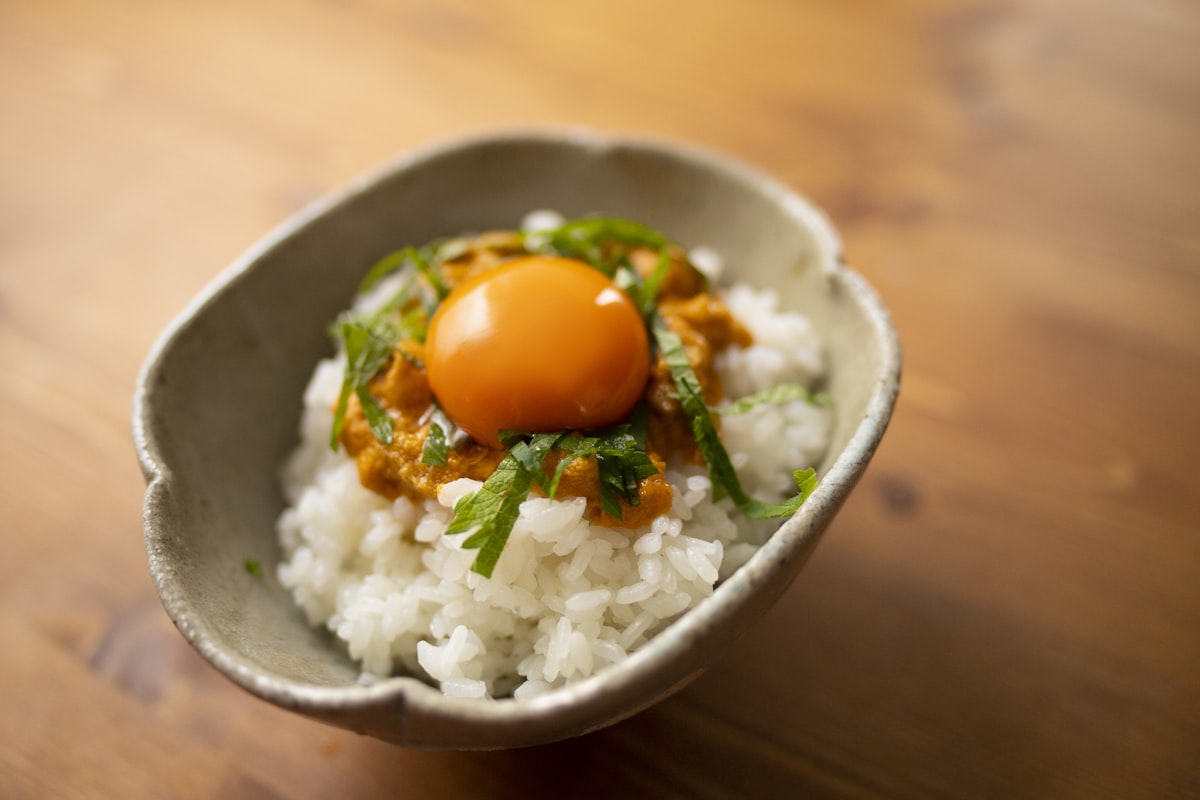
Tamago Kake Gohan (TKG) — Japan’s simplest and most satisfying breakfast. Photo: Unsplash
18. Matcha Desserts
Matcha (finely powdered green tea) has conquered the global dessert world, but nowhere does it taste better than in Japan — particularly in Kyoto’s Uji region, where the finest matcha is grown. Matcha soft serve (soft cream) with an intense, slightly bitter, verdant flavor is everywhere. Matcha parfaits, warabi mochi dusted in matcha powder, and hojicha (roasted green tea) ice cream are all worth seeking out.
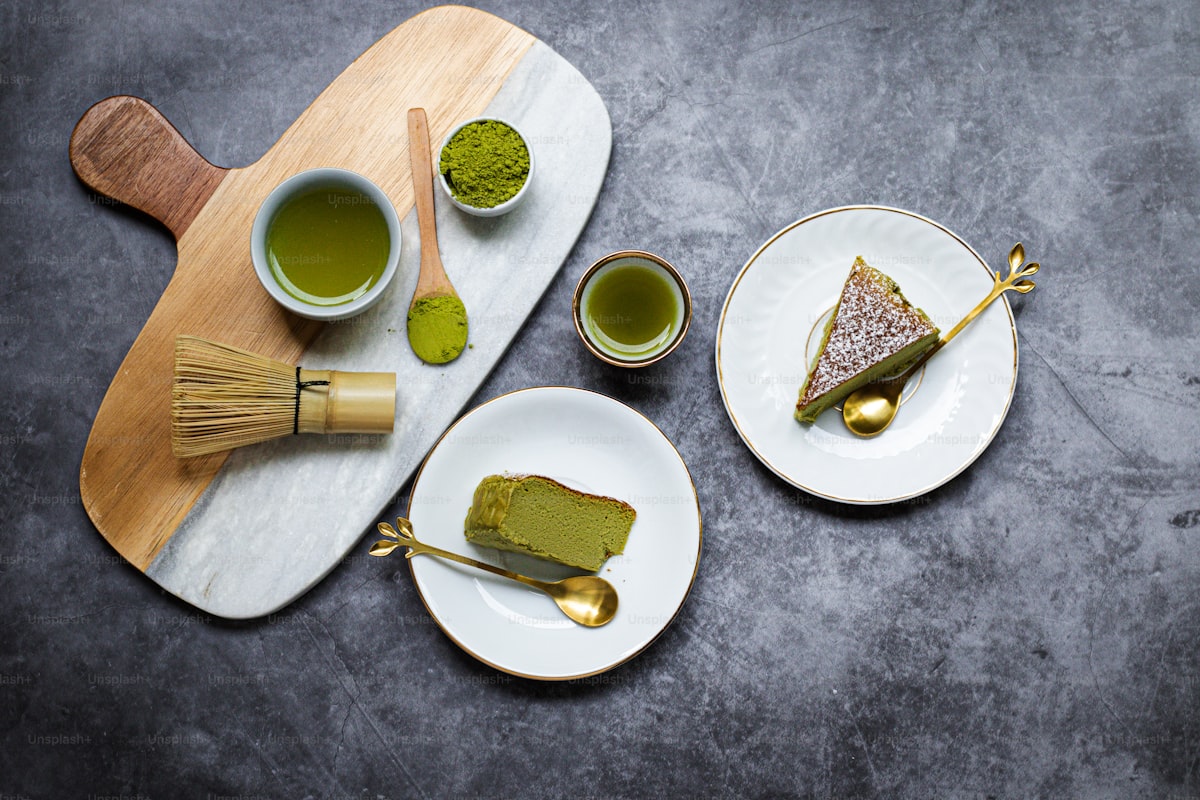
Matcha desserts — intense, verdant, and utterly addictive. Best enjoyed in Kyoto’s Uji region. Photo: Unsplash
19. Mochi
Glutinous rice cakes with an extraordinary, bouncy, chewy texture. Mochi comes in countless forms: daifuku (soft mochi filled with sweet red bean paste or strawberry), grilled yaki mochi brushed with soy sauce, and the mind-bending liquid mochi of Kyoto’s yatsuhashi.
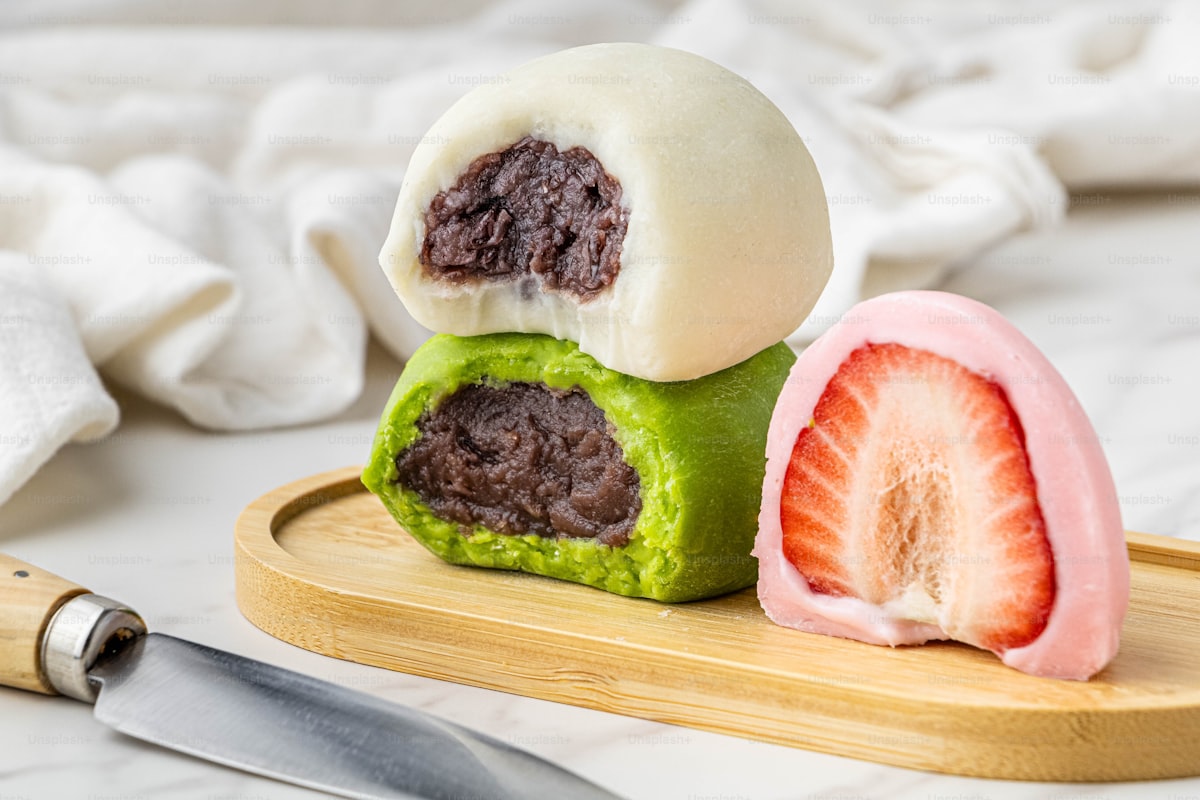
Mochi — Japan’s beloved chewy rice cakes, from classic daifuku to seasonal flavors. Photo: Unsplash
20. Kaiseki
Kaiseki is Japan’s highest form of culinary art — a multi-course feast that celebrates the season through 10–15 small courses, each precisely composed and presented. Rooted in the tea ceremony tradition of Kyoto, kaiseki might include delicate sashimi, a steamed dish, a grilled course, and finally rice and pickles. A true kaiseki meal in Kyoto can cost ¥15,000–¥50,000+ per person, but the experience is like nothing else on earth.
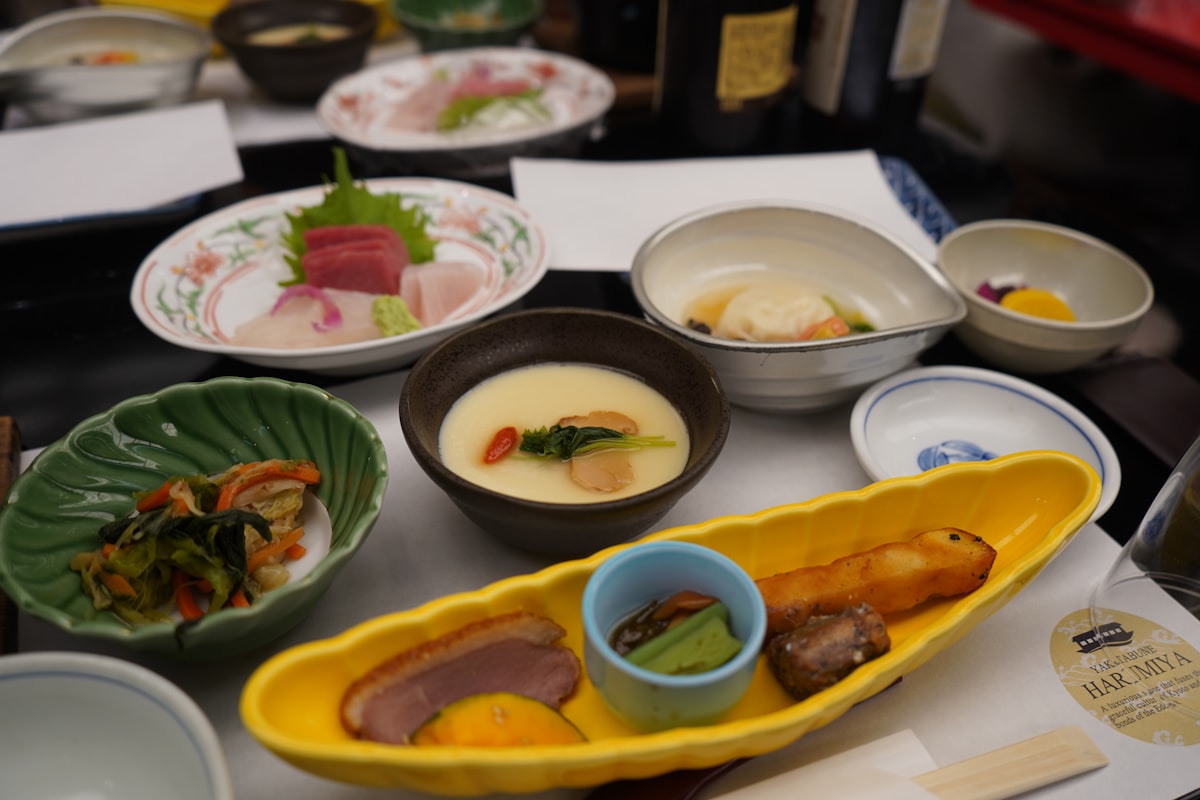
Kaiseki — Japan’s highest culinary art form, where every dish is a seasonal masterpiece. Photo: Unsplash
Japanese Street Food Guide
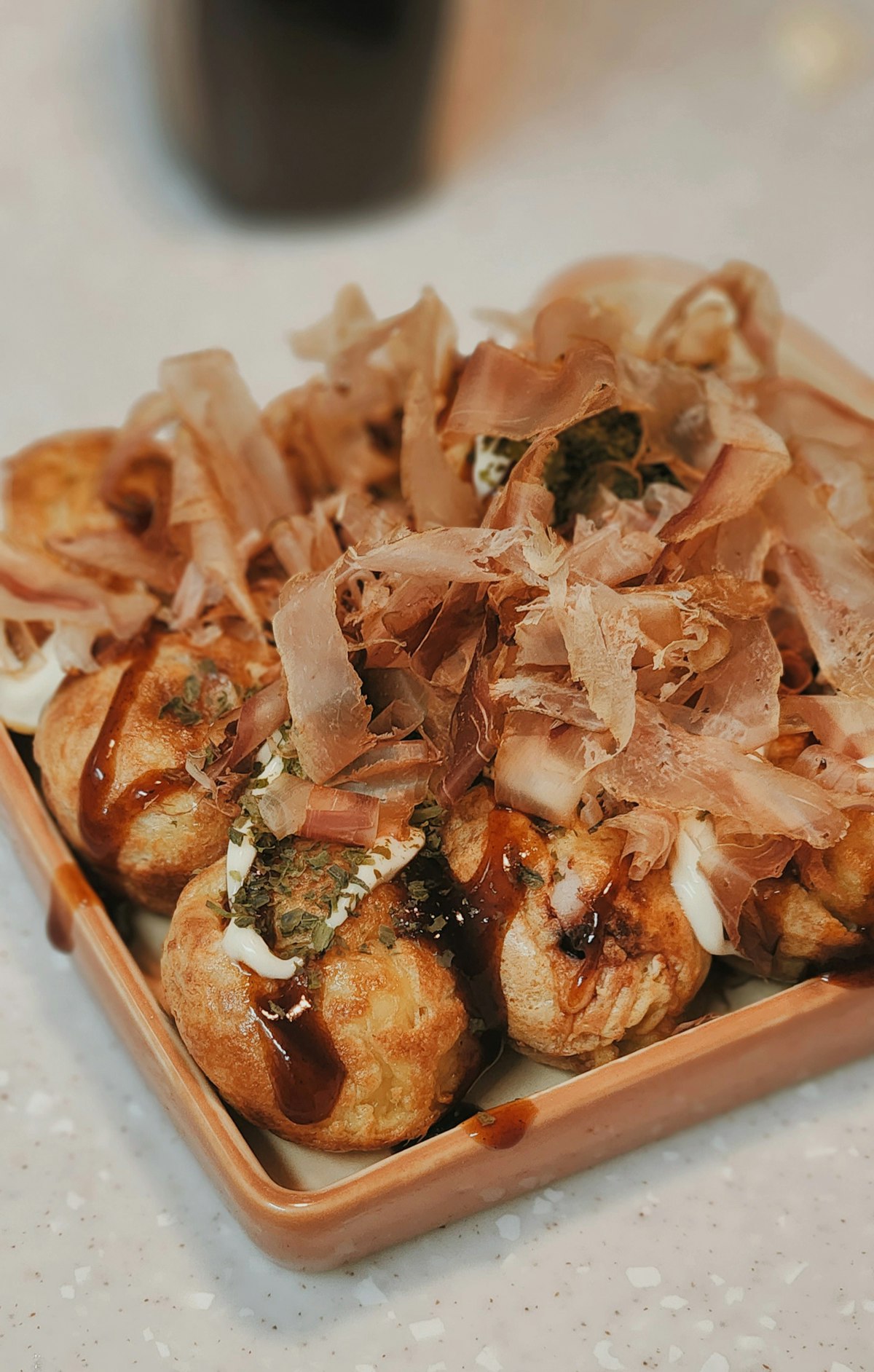
Takoyaki — Osaka’s most iconic street food, best eaten fresh and piping hot. Photo: Unsplash
Japan does not have as much sidewalk street food culture as, say, Bangkok — eating while walking is considered slightly rude in many places. However, the street food scene at festivals, markets, and designated food areas is fantastic. Here are the essential street foods to seek out:
- Takoyaki — Osaka’s octopus balls (see above)
- Taiyaki — Fish-shaped waffles filled with red bean paste, custard, or chocolate
- Yakisoba — Stir-fried noodles with pork, vegetables, and savory sauce on a hot iron plate
- Crepes — Tokyo’s Harajuku invented the rolled crepe filled with fruits, cream, and ice cream. Worth trying on Takeshita Street.
- Melonpan — A crispy, cookie-dough-topped sweet bun. Best eaten warm from the oven.
- Dango — Skewered rice dumplings in three colors, glazed with sweet soy sauce. Classic festival food.
- Yakiimo — Slow-roasted sweet potatoes sold from specialized trucks in autumn and winter. The interior turns into liquid honey-sweet gold.
Regional Specialties by City
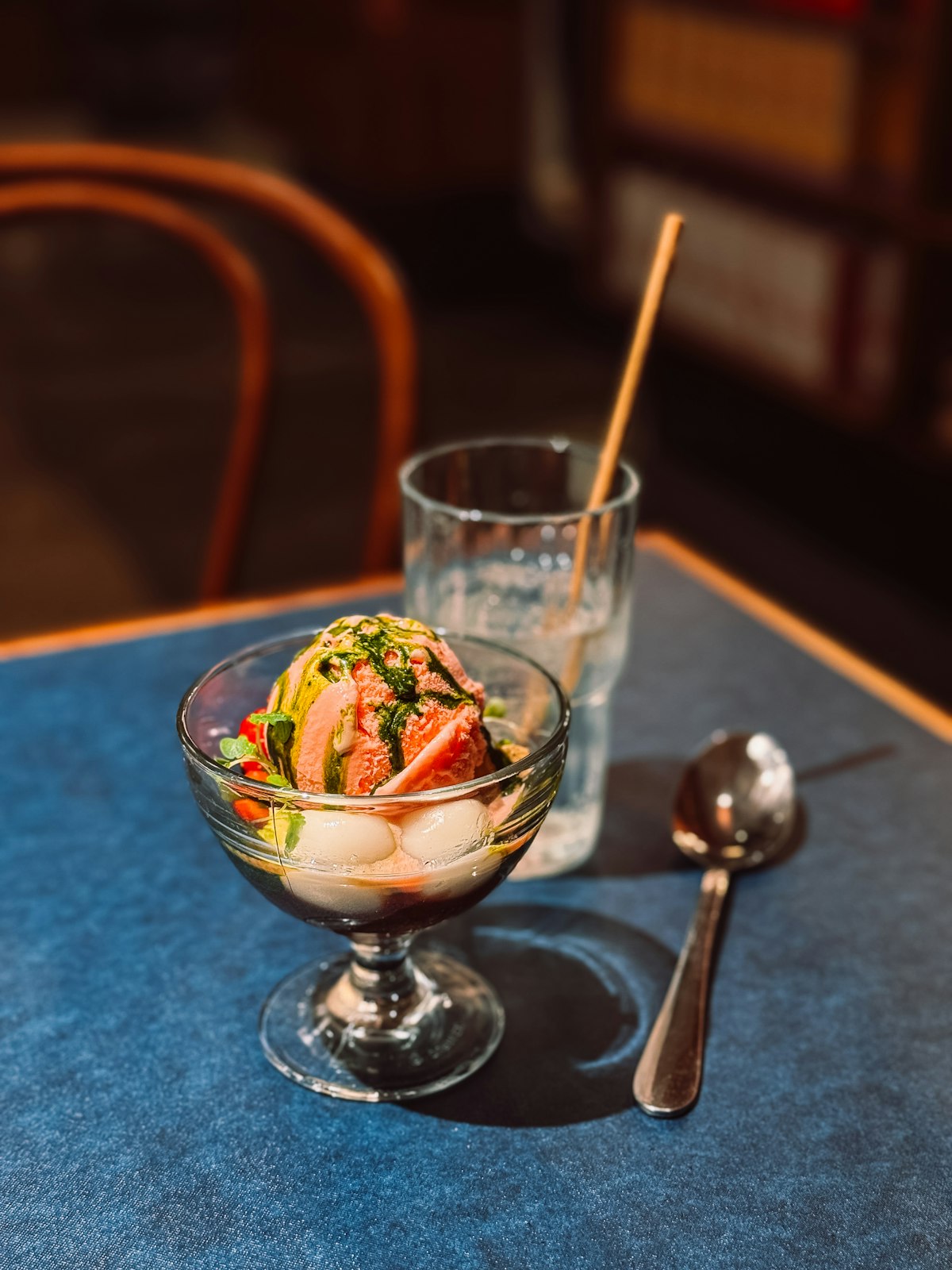
Matcha soft serve — intensely flavored and utterly addictive. Kyoto’s Uji region grows the finest matcha. Photo: Unsplash
One of the joys of traveling across Japan is discovering how dramatically the food changes from region to region. Every city and prefecture has its own local dishes that locals are fiercely proud of. Trying the local meibutsu (famous things) is as important as seeing the sights.
| City / Region | Must-Try Specialties |
|---|---|
| Tokyo | Monjayaki, Edomae sushi, Tokyo-style shoyu ramen, Harajuku crepes |
| Kyoto | Kaiseki, yudofu (tofu hot pot), matcha desserts (Uji), kyo-wagashi, yuba (tofu skin) |
| Osaka | Takoyaki, okonomiyaki, kushikatsu, fugu, Osaka-style oshizushi |
| Hiroshima | Hiroshima-style okonomiyaki (with soba noodles), fresh oysters, momiji manju |
| Fukuoka | Tonkotsu ramen (birthplace), mentaiko (spicy cod roe), hakata udon, yatai stall culture |
| Hokkaido | Miso ramen with butter & corn, soup curry, Genghis Khan lamb BBQ, fresh uni, crab, ikura |
| Okinawa | Champuru (bitter melon stir-fry), Okinawa soba, Awamori rice spirit, taco rice |
| Nagoya | Miso katsu, hitsumabushi (eel over rice), miso nikomi udon, ankake spaghetti |
🍡 Eat your way through Osaka: Osaka 180-Min Daytime Dotonbori Food Tour on Klook →
Types of Japanese Restaurants Explained
Japan has a remarkably specialized restaurant culture — most restaurants do one thing and do it brilliantly. Understanding the types of restaurants will help you navigate any menu.
Izakaya (居酒屋)
The Japanese gastropub — a lively, casual restaurant where you order many small dishes to share over drinks. The izakaya is the heart of Japanese social dining culture. Dishes are broad: yakitori, karaage, edamame, gyoza, sashimi, grilled fish. Evening only, typically open from 5pm. Budget ¥2,000–¥4,000 per person including drinks.
🍶 Taste authentic Japanese sake: Japanese Sake Tasting Experience at Tsukiji on Klook →
Ramen-ya (ラーメン屋)
Dedicated ramen shops, ranging from tiny counter-only spaces with 8 seats to large chains. Many use a vending machine at the entrance — insert your money, press the button for your choice, and give the ticket to the chef. No tipping, no fuss, extraordinary food.
Kaiten-zushi (回転寿司)
Conveyor belt sushi restaurants. Plates rotate past on a belt; take what you want, pay by the plate at the end. Many now use tablet ordering. Chains like Sushiro, Kurazushi, and Hama-sushi are excellent value and a fantastic introduction to Japanese sushi.
Set Meal Restaurants (定食屋 / Teishoku-ya)
Lunch-focused restaurants offering set meals (teishoku) of a main dish, rice, miso soup, and pickles at very reasonable prices. Look for the lunch set boards outside restaurants from 11am–2pm — many high-quality restaurants offer dramatically reduced lunch prices.
Kissaten and Cafes
Traditional Japanese coffee shops (kissaten) opened in the 1950s–70s and developed a distinct culture of hand-drip coffee, toast with butter or jam, and egg salad sandwiches as morning sets. These are cultural institutions worth visiting.
Convenience Stores (コンビニ)
Japan’s convenience stores — 7-Eleven, FamilyMart, and Lawson — deserve special mention. Japanese konbini food is genuinely good: freshly made onigiri, oden (stewed ingredients in dashi), hot steamed buns, sandwiches, salads, and hot drinks. When in doubt, the nearest konbini is never more than a short walk away, open 24 hours, and will not disappoint.
Japanese Dining Etiquette
- Say “Itadakimasu” before eating — This phrase (literally “I humbly receive”) is said before beginning a meal. Learn it. Use it.
- Say “Gochisousama deshita” after eating — Said to the restaurant after finishing, meaning “it was a feast.”
- Never stick chopsticks upright in rice — This mimics funeral offerings and is considered inauspicious.
- It is fine — encouraged — to slurp noodles — Slurping enhances the flavor and cools the noodles. It is a sign of appreciation.
- Do not tip — Tipping is not practiced in Japan and can cause genuine confusion. Service is included in the culture, not the bill.
- Pouring for others — When drinking with others, pour for companions first and let others pour for you.
- Do not eat while walking — Eating street food while walking is frowned upon outside of festival settings.
Eating in Japan with Dietary Restrictions
Vegetarian and Vegan
This is the biggest challenge. Dashi (fish stock) is the foundation of much of Japanese cooking and is invisible in dishes — miso soup, many noodle broths, and pickles may all contain it. Restaurants that specifically cater to vegetarians/vegans do exist, particularly in Kyoto and Tokyo. Some temples serve shojin ryori — traditional Buddhist vegetarian cuisine that is extraordinary in its own right.
Gluten-Free
Soy sauce (shoyu) contains wheat, making gluten-free eating difficult in Japan. Tamari soy sauce is gluten-free, but you will need to ask specifically. Carry tamari sachets and a card in Japanese explaining your restriction.
Halal
The number of halal-certified restaurants in Japan has grown significantly in recent years, particularly in Tokyo, Osaka, and Kyoto. Apps like Halal Navi and HalalGourmet JP help locate certified restaurants.
Best Food Markets and Food Halls in Japan
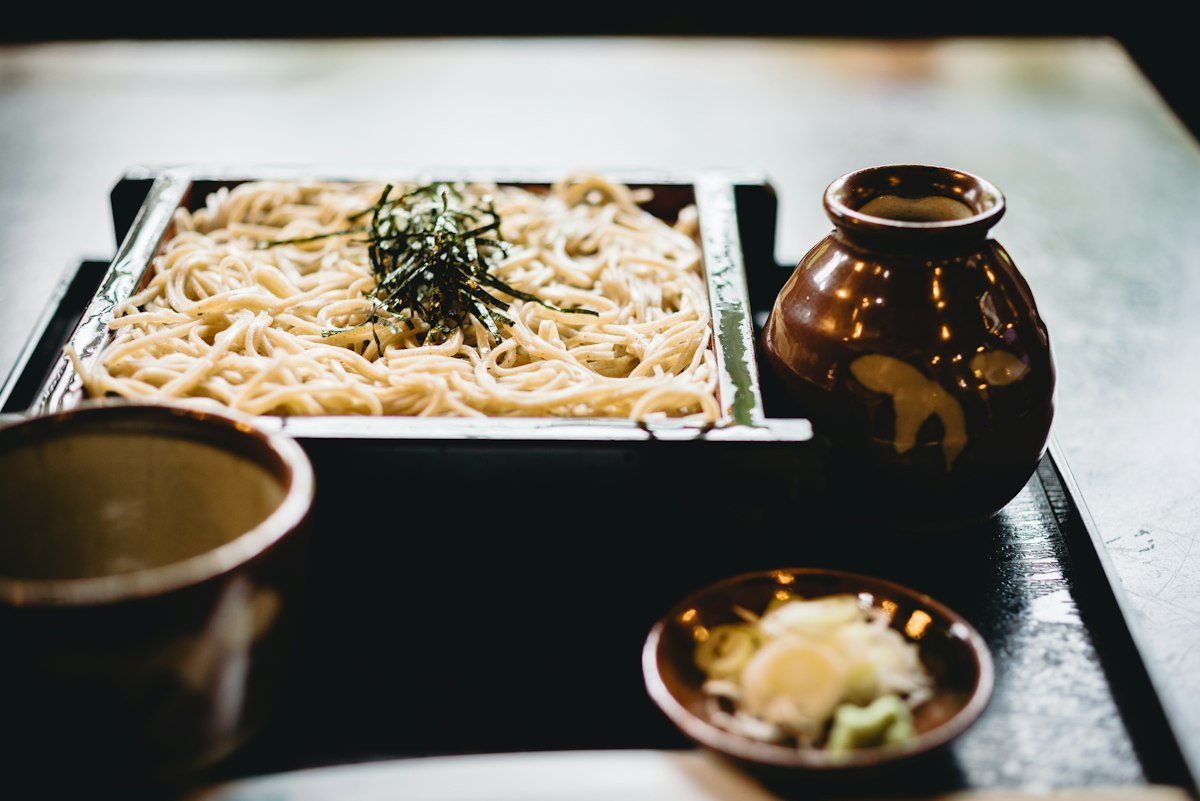
Japan’s food markets are a feast for all the senses. Photo: Unsplash
Tsukiji Outer Market, Tokyo
The inner wholesale fish market moved to Toyosu, but Tsukiji’s outer market remains open and is still one of the best food experiences in Tokyo. Arrive early for fresh seafood breakfasts — grilled scallops, sea urchin on rice, and impossibly fresh tuna sashimi — at market stalls that have been here for generations.
🐟 Explore Tsukiji with a guide: Tsukiji Fish Market Food & Drink Half-Day Tour on Klook →
Toyosu Market, Tokyo
The relocated central wholesale fish market. Visitors can observe the famous tuna auction from observation decks (requires advance reservation). The market’s restaurants serve some of the freshest seafood in Tokyo at reasonable prices.
Nishiki Market, Kyoto
Dubbed “Kyoto’s Kitchen” — a narrow covered arcade running for five blocks filled with around 100 stalls selling Kyoto specialty foods: pickled vegetables (tsukemono), fresh tofu, grilled skewers, sweet red bean mochi, and dozens of Kyoto-specific ingredients.
Kuromon Ichiba, Osaka
Osaka’s famous food market — locals call it “Osaka’s Kitchen.” Around 150 vendors selling fresh seafood, meat, fruit, and Osaka street food. Go on a weekday and arrive before 11am for the best experience.
Depachika (Department Store Food Halls)
Every major Japanese department store has a spectacular basement food hall (depachika) worth visiting as a destination in its own right. Isetan in Shinjuku, Takashimaya, and Daimaru at Tokyo Station all offer extraordinary collections: bento boxes, wagashi sweets, premium meats, artisan chocolates, and seasonal specialties from across Japan.
Money-Saving Food Tips
- Eat the lunch set — Many upscale restaurants offer dramatically reduced lunch menus (¥1,000–¥2,500) that let you experience the same kitchen for a fraction of dinner prices.
- Convenience store meals — A full meal from a Japanese konbini (onigiri + sandwiches + hot items) runs ¥400–¥700 and is genuinely delicious.
- Standing bars and soba counters — Many train stations have standing-only (tachinomi) soba and ramen counters offering bowls from ¥350–¥600.
- Depachika evening discounts — Department store food halls mark down prepared foods significantly after 6pm. Great time to grab premium bento at half price.
- Gyudon chains for breakfast/lunch — Yoshinoya, Sukiya, and Matsuya serve beef-on-rice bowls (gyudon) from ¥400–¥600. A complete, filling, and delicious meal.
Frequently Asked Questions
Is food in Japan expensive?
Japan offers an extraordinary range. You can eat an excellent lunch for ¥500–¥1,000 at a standing soba bar or konbini, or spend ¥50,000+ per person at a top omakase sushi restaurant. The middle ground — neighborhood ramen shops, izakayas, set lunch meals — offers exceptional value compared to equivalent quality elsewhere in the world.
Do restaurants in Japan have English menus?
Many tourist-area restaurants in major cities now have English menus, QR codes linking to multilingual menus, or picture menus. Smaller neighborhood restaurants may be Japanese-only, but Google Translate’s camera function works remarkably well on Japanese menus.
What food should I try first in Japan?
If we had to choose three: ramen (at a proper shop), fresh sushi (at a kaiten-zushi or neighborhood sushiya), and a convenience store onigiri. These three foods represent the extraordinary range of Japanese cuisine — from artisan craft to humble perfection.
Is it rude to not finish your food in Japan?
Finishing all the food on your plate — including every grain of rice — is considered a sign of respect and appreciation. Finishing your meal, particularly the rice, is the polite choice.
Can I drink tap water in Japan?
Yes — Japan has some of the safest, cleanest, and best-tasting tap water in the world. Drink freely from the tap in hotels and public facilities. You do not need to buy bottled water unless you prefer the taste.
What is the best city in Japan for food?
Osaka has the most vibrant street food culture (kuidaore — “eat until you drop” — is literally Osaka’s motto). Tokyo has the greatest density and diversity of world-class restaurants. Kyoto is unrivaled for traditional cuisine. Fukuoka punches far above its weight with incredible ramen and yatai culture. Honest answer: eat everywhere.
Final Thoughts: Eat Your Way Through Japan
Japan’s food culture is not a sightseeing attraction — it is a way of life. The same care and dedication that goes into building a centuries-old temple goes into perfecting a bowl of ramen broth. To eat in Japan is to experience the culture at its most intimate and generous.
Our best advice: be curious, be willing to try everything, and go into every meal without expectations. Say itadakimasu before you eat and gochisousama deshita when you finish. Japan will feed you extraordinarily well. The only regret most visitors have is that they did not eat more.
10-Day Japan Itinerary |
Japan Travel Budget 2026 |
What to Pack for Japan

コメント