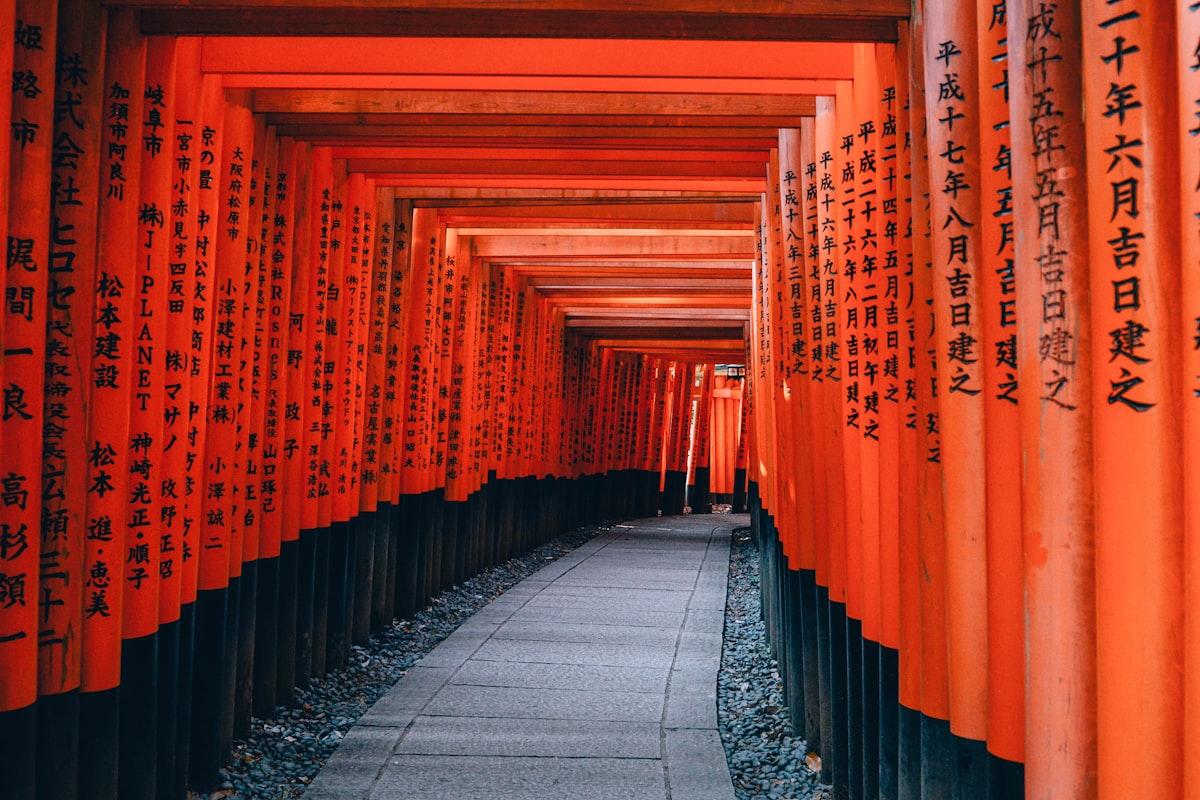
You’ve booked the flights. You’ve mapped the temples, shortlisted the ramen shops, and downloaded your offline maps. But there’s one thing that separates a good Japan trip from a genuinely great one — understanding how to behave. Japan operates on a set of social codes so deeply embedded in daily life that locals follow them instinctively, without a second thought. For first-time visitors, however, these unspoken rules can feel overwhelming, or worse, invisible until you’ve already broken one. That’s exactly why we put this guide together.
This is the most comprehensive Japan etiquette guide for 2026 — covering everything from train behaviour and temple protocol to onsen rules, dining manners, and the specific new rules introduced this year that every visitor needs to know before landing. Read it once before you fly, and you’ll move through Japan with the kind of quiet confidence that turns heads (in a good way).
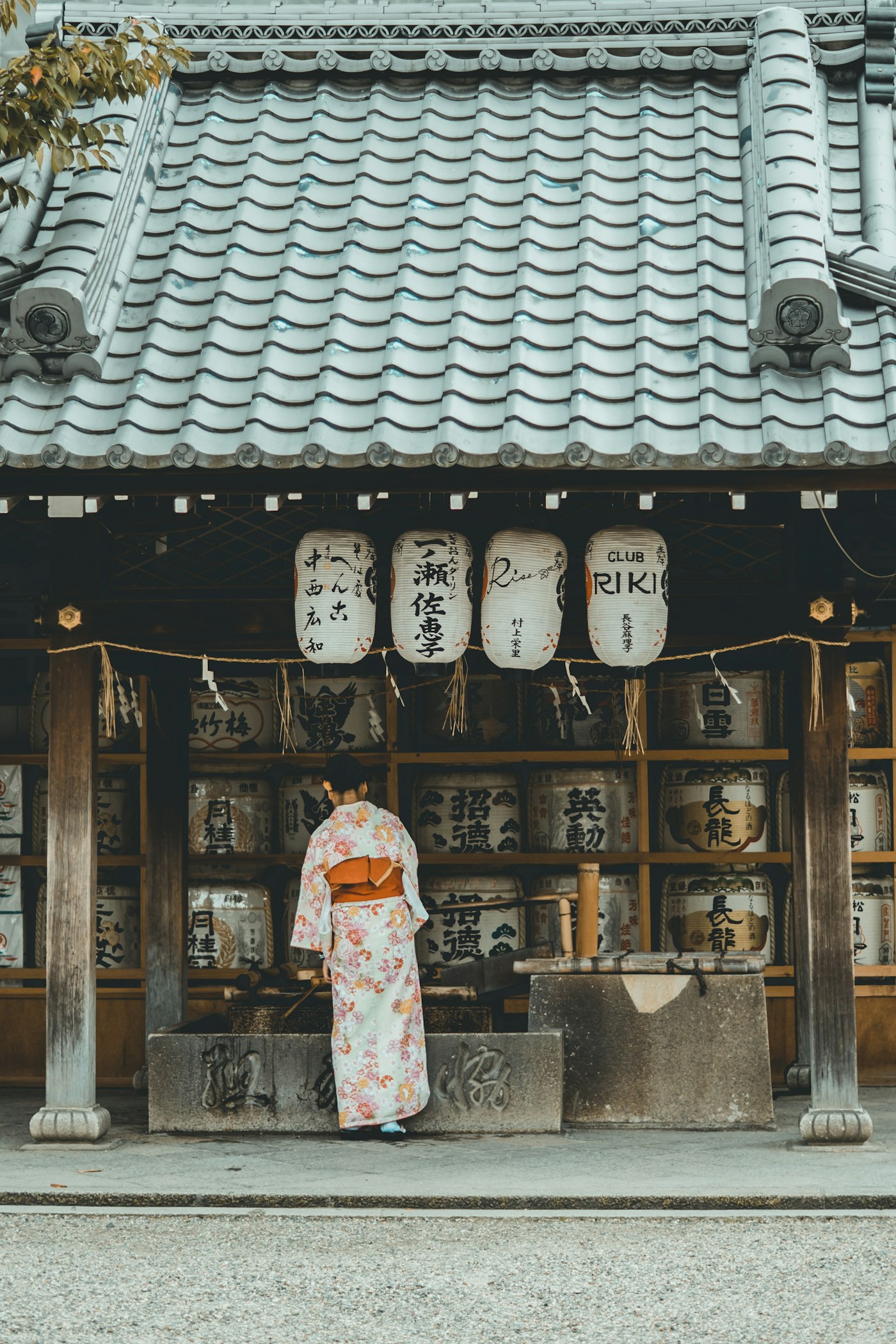
Respecting Japan’s customs makes every experience richer. Photo: Unsplash
Table of Contents
- 🆕 New Rules & Changes for 2026 — Read This First
- General Social Etiquette in Japan
- Train & Public Transport Etiquette
- Shrine & Temple Etiquette
- Dining & Restaurant Etiquette
- Onsen (Hot Spring) Etiquette
- Shopping & Money Etiquette
- Photography Etiquette
- Hotel & Ryokan Etiquette
- Language Tips & Communication
- Quick Reference Summary Table
- Pre-Departure Etiquette Checklist
🆕 1. New Rules & Changes for 2026 — Read This First
Japan has always had etiquette. But 2026 brings several concrete, government-enforced changes that affect how you behave — and how much you pay — when visiting. These aren’t optional social norms; they’re official policy shifts every traveller needs to know before booking flights.
Tourist Departure Tax: Tripled to ¥3,000
EssentialEffective July 1, 2026, Japan’s international tourist departure tax increases from ¥1,000 to ¥3,000 per person (ages 2 and older). This applies every time you leave Japan by air or sea. The tax is added directly to your airfare and collected by the airline — there’s nothing to pay separately. But if you’re planning multiple entries and exits (a Japan-Korea combo trip, for example), budget accordingly. If your departure date falls before July 1, you’ll still pay the lower ¥1,000 rate, so it’s worth factoring this into your travel dates if flexibility allows.
Tax-Free Shopping: New Refund-Based System from November 2026
EssentialJapan’s beloved tax-free shopping system is changing in November 2026. Previously, tourists could get the 10% consumption tax deducted at the register by showing a passport. From November 1, 2026, you’ll pay full price at the store and claim a refund at the airport on departure. This means you’ll need more cash upfront when shopping (you’re temporarily out of pocket by 10%), and you’ll need to keep all receipts organised. Allow extra time at the airport for refund processing. The minimum purchase threshold for eligibility remains ¥5,000. Shop before November if you want the simpler, instant system — or adjust your budget expectations if your trip extends past that date.
Photography Restrictions: Tighter Enforcement in Kyoto & Beyond
ImportantKyoto’s Gion district has intensified its photography crackdown in 2026. Several narrow alleys — including parts of Hanamikoji Street — are now fully restricted, with signs warning of fines for violations. Similar restrictions exist at several Nara deer parks and certain temple interiors. The rule is simple: if you see a no-photography sign, it means it. Photographing geisha (geiko) or maiko without permission is explicitly prohibited. Beyond Kyoto, many temples across Japan now restrict interior photography even where it was previously tolerated. Always check before you shoot.
Shinkansen Oversized Baggage: Now Enforced
ImportantThe Shinkansen baggage rules introduced in 2020 are now actively enforced with fines. Any bag with combined dimensions (length + width + height) exceeding 160cm requires a reserved seat in the designated oversized baggage area. Bringing an oversized bag without a reservation incurs a ¥1,000 fine. The affected lines are the Tokaido, Sanyo, Kyushu, and Nishi-Kyushu Shinkansen. Most standard large suitcases fall around 70–75cm tall and measure well under 160cm total — but double-check your luggage before travelling. You can reserve an oversized seat through the SmartEX app or JR ticket counters.
2. General Social Etiquette in Japan
Japan’s social fabric is woven from consideration for others — what the Japanese call meiwaku (causing inconvenience). Understanding this concept is the key that unlocks almost everything else. Most Japanese etiquette rules, from the quiet on trains to the no-eating-while-walking norm, trace back to a single root: don’t burden the people around you. Once you internalise this, the rules stop feeling like constraints and start feeling like common sense.
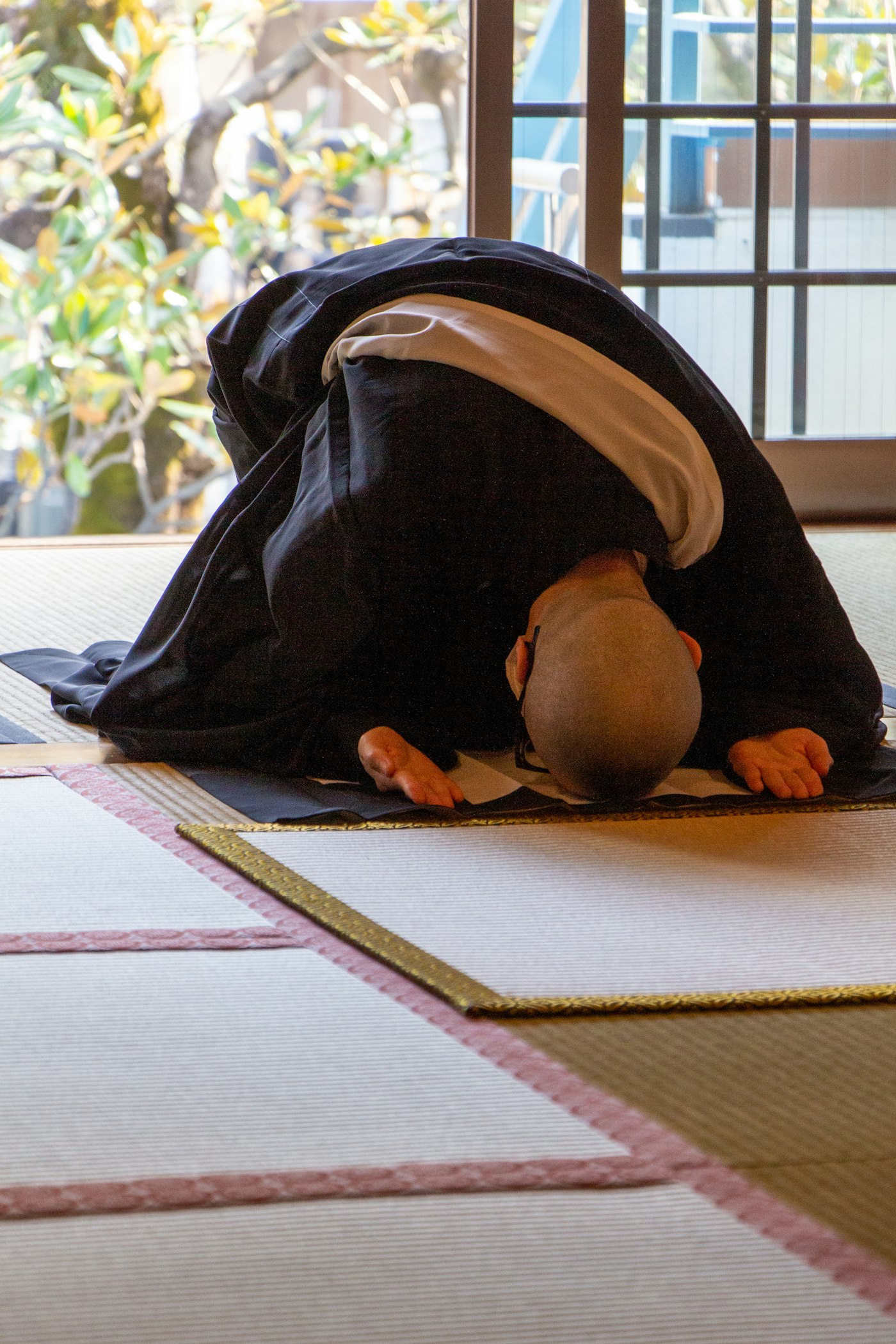
Bowing is the universal greeting in Japan — a small nod goes a long way. Photo: Unsplash
Bowing
Good to KnowBowing is Japan’s primary greeting, and it signals respect, gratitude, and acknowledgement simultaneously. As a tourist, you’re not expected to master the precise angles (15° casual, 30° respectful, 45° deeply formal) — a simple, sincere nod or slight bow is always appreciated and never wrong. Bow when greeting a shopkeeper, thanking a server, or saying goodbye. Don’t attempt to shake hands unless the other person initiates — in many formal Japanese contexts, it’s unexpected. And absolutely do not bow with your hands in your pockets; it reads as dismissive.
Walking & Public Spaces
EssentialJapan’s cities feel orderly partly because everyone moves with awareness of the people around them. Walk on the left side of corridors and footpaths (Tokyo convention; Osaka is sometimes reversed). Don’t stop suddenly in the middle of a busy street to check your phone — step to the side. Keep your voice low in public. Pointing at people or things with a single finger is considered impolite; use an open hand instead. If you need to gesture toward someone, use your whole hand, palm facing down.
Rubbish & Litter
EssentialJapan has almost no public rubbish bins — and yet the streets are immaculate. The reason is that Japanese people carry their rubbish home with them. This is genuinely non-negotiable. Don’t leave food wrappers, drink cans, or any rubbish on the street, in parks, or at shrines. Carry a small plastic bag in your daypack specifically for rubbish — it’s a habit Japanese people develop from childhood. The only exception: convenience stores (konbini) and vending machine areas usually have bins for their own product packaging. Use them appropriately.
Noise Levels
EssentialJapan is, by global standards, a quiet country. Conversations in public tend to be hushed; phone calls on public transport are actively frowned upon (see the train section). At temples, shrines, and gardens, the silence is part of the experience. At restaurants, a normal conversational tone is fine, but extended loud laughter or table-pounding will draw uncomfortable stares. Groups of tourists — especially large ones — are often the loudest presence in any Japanese public space. Be aware of this and calibrate accordingly.
Eating While Walking
ImportantEating while walking is generally considered poor etiquette in Japan, outside of festival or street market contexts. You’ll see this in practice: takoyaki stall customers stand next to the stall to eat, not while walking away. This norm is rooted in respect for both food and shared spaces. Festival stalls (yatai) at matsuri events are an exception — eating while browsing stalls is expected. In Nikko, Kamakura, and some tourist market areas, there are food vendors where eating while walking has become semi-accepted due to tourist norms. Use your judgment, but when in doubt, stop and eat before moving on.
✅ Do
- Bow when greeting or thanking someone
- Keep your voice low in public
- Carry your rubbish until you find a bin
- Remove shoes when indicated at entrances
- Queue patiently and don’t cut in line
- Say sumimasen (excuse me) when passing
- Give up your seat to elderly, pregnant, or disabled passengers
❌ Don’t
- Point with a single finger at people or places
- Drop litter anywhere outdoors
- Speak loudly in public transport or quiet areas
- Eat while walking (outside festivals)
- Tip — it’s genuinely unnecessary and can cause confusion
- Touch or lean on historical artefacts
- Take photos of strangers without permission
3. Train & Public Transport Etiquette
Japan’s train system is the best in the world — punctual, clean, and extraordinarily well-organised. Part of what makes it work is that everyone follows the same unspoken rules. As a visitor, learning these rules is both respectful and entirely in your self-interest: violating them is the fastest way to mark yourself as the loudest person in the carriage.
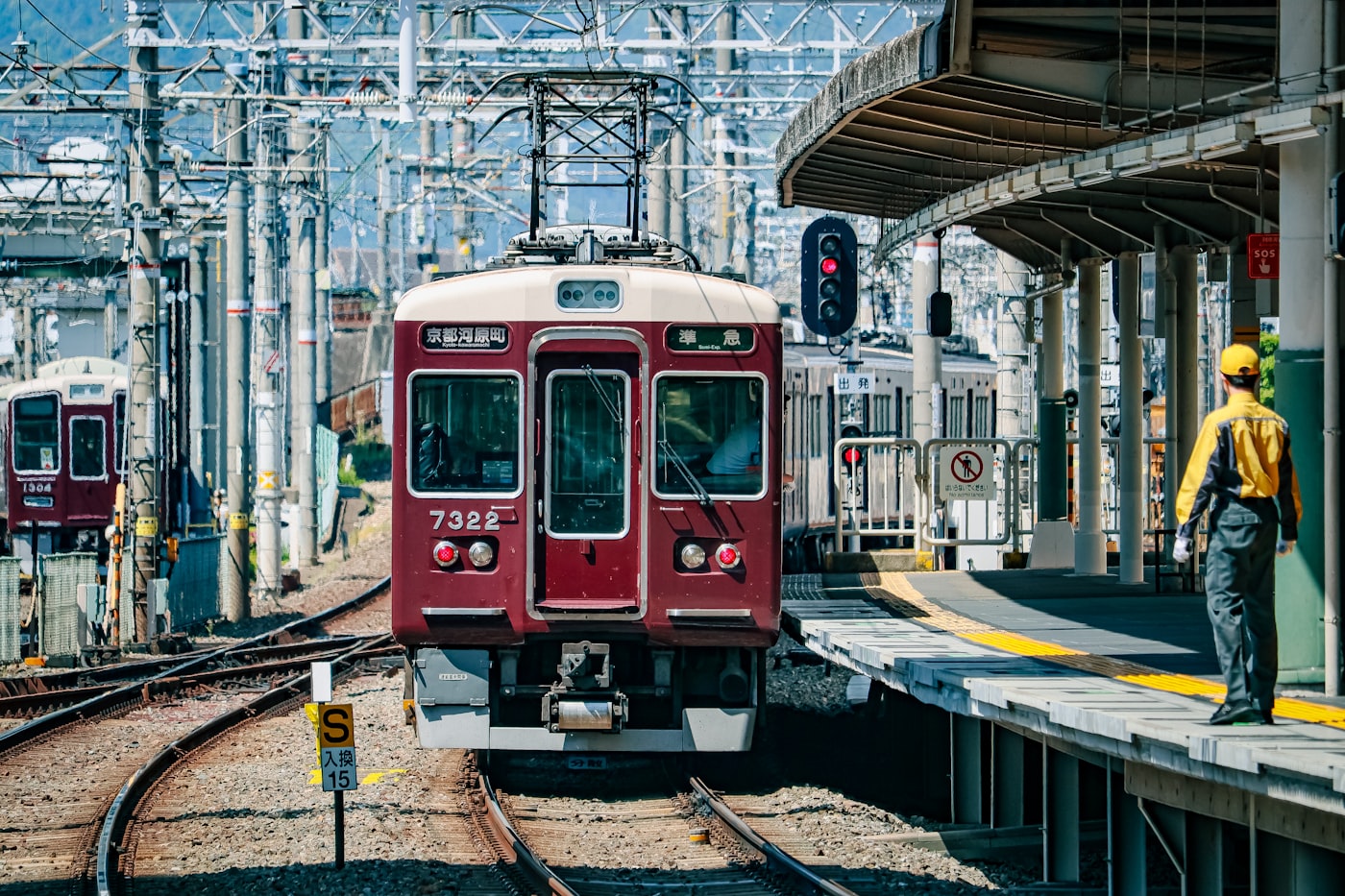
Japan’s trains are quiet by culture — not just by policy. Photo: Unsplash
Phone Calls on Trains
EssentialPhone calls on trains and buses are one of the most firmly enforced social norms in Japan. You will see signs in every carriage asking passengers to switch phones to silent mode and refrain from calling. Taking or making a call on a Japanese train will immediately identify you as oblivious to local norms — and you’ll likely receive visible discomfort from fellow passengers. Text, use apps, listen to music with headphones. If you genuinely need to take a call, move to the inter-carriage vestibule area between carriages, where calls are more tolerated.
Music & Audio
ImportantHeadphones are standard on Japanese trains — but audio must not bleed out. If the person next to you can hear your music, it’s too loud. This applies equally to videos, podcasts, and games. The expectation of silence on trains is so strong that even headphone bleed is considered inconsiderate. Use over-ear or good in-ear headphones and keep volume moderate.
Bags & Luggage
ImportantDuring peak hours, backpacks should be removed from your back and held in front of you, or placed in the overhead rack. Large rolling suitcases should never be brought onto trains during morning or evening rush hours (roughly 7:30–9:00am and 5:30–8:00pm on weekday lines). Instead, use Japan’s takkyubin luggage forwarding service to send your bags directly between hotels, or store them in a coin locker at the station. This is one of the genuinely game-changing travel moves in Japan — arriving at your hotel bag-free after a day of sightseeing is worth every yen. [AFFILIATE LINK: Klook luggage forwarding or Ecbo Cloak]
Boarding & Queuing
EssentialOn train platforms, yellow lines on the floor indicate exactly where passengers should queue. Look for these markings and stand in line — departing passengers exit the train first, then waiting passengers board in an orderly single file. Never push, rush, or board before others have finished exiting. On escalators, stand on one side to allow those in a hurry to pass. In Tokyo, stand on the left (right side free for walking). In Osaka, it’s typically the reverse. Watch what locals do and match them.
Priority Seats
EssentialEvery Japanese train carriage has clearly marked priority seats — designated for elderly passengers, pregnant women, passengers with disabilities, and those with young children. These seats are identified by distinctive pink or blue signage. You should always vacate these seats if someone who needs them enters the carriage, even if they don’t ask. On some lines, passengers are expected to switch phones to airplane mode entirely while seated in priority sections — look for the signs.
Eating on Trains
Good to KnowEating on regular commuter trains (metro, local JR lines) is generally not done. On long-distance Shinkansen (bullet trains) and limited express services, eating is fully acceptable and culturally expected — this is exactly what ekiben (station bento boxes) exist for. If you’re on a Shinkansen, go ahead and enjoy your bento. If you’re on the Tokyo Metro or Osaka subway heading between sightseeing spots, hold off until you reach your destination or find a café.
4. Shrine & Temple Etiquette
Visiting Japan’s shrines and temples is one of the defining experiences of any Japan trip — and these aren’t just tourist attractions. Millions of Japanese people visit them regularly for prayer, ceremony, and quiet reflection. The etiquette here matters more than anywhere else, and getting it right genuinely changes the experience: instead of feeling like an observer, you’ll feel like a respectful participant.
Walking Through the Torii Gate
EssentialAt Shinto shrines, the torii gate marks the boundary between the ordinary world and sacred ground. The centre of the path leading through the gate — the sando — is considered the path of the gods. Walk slightly to the left or right of the very centre of the path, leaving the middle open. Bow lightly when passing through the torii gate in either direction. This small gesture signals awareness and respect.
The Purification Fountain (Temizuya)
EssentialBefore approaching the main hall of a shrine, you’ll find a stone basin with flowing water and wooden ladles — the temizuya. This ritual purification (temizu) is not optional; it’s the correct way to approach a sacred space. The sequence: take the ladle with your right hand and rinse your left hand. Transfer the ladle to your left hand and rinse your right hand. Transfer back to your right hand, cup your left hand, and rinse your mouth (spit the water out discreetly). Finally, hold the ladle upright and let water run down to clean the handle before replacing it. During COVID, many shrines simplified or suspended this practice — some have since resumed it fully.
Praying at the Main Hall
Good to KnowAt the main hall of a Shinto shrine: toss a coin into the offering box (any denomination is fine, though ¥5 coins — called goen — are traditional because “goen” also means “fate” or “connection”). Bow twice. Clap twice. Make your wish or prayer quietly. Bow once more. This sequence is often written on a sign nearby. At Buddhist temples, the approach is slightly different — place your hands together (no clapping) and bow quietly. Removing hats in the main hall is always appropriate.
Behaviour Within Sacred Grounds
EssentialKeep voices low throughout the shrine or temple complex — not just at the main hall. Running is inappropriate (especially for adults). Don’t touch any sacred objects, statues, or artefacts behind rope barriers or on altars. Don’t step on the raised thresholds of buildings — these are symbolic boundaries. And please: don’t use these spaces purely as photo backdrops while ignoring the people who are there to actually pray. Wait for someone to finish praying before taking photos near the altar area.
Want to book a guided temple or shrine experience to go deeper? [AFFILIATE LINK: Klook] offers some excellent cultural experiences — from tea ceremonies at traditional Kyoto machiya townhouses to private temple visits with resident monks that give context you simply can’t get from a guidebook.
Book a Guided Cultural Experience
Understand Japan’s shrines and temples at a deeper level with a guided tour or cultural activity. Tea ceremonies, temple morning walks, and shrine rituals — all bookable in advance.
Browse Experiences on Klook →5. Dining & Restaurant Etiquette
Japan has more Michelin-starred restaurants than any other city in the world — but some of the most memorable meals happen at a ¥800 ramen counter or a family-run izakaya where the menus are handwritten in Japanese and nobody speaks English. Knowing the dining codes lets you access the full range of Japan’s food culture, from the highest-end to the most local.
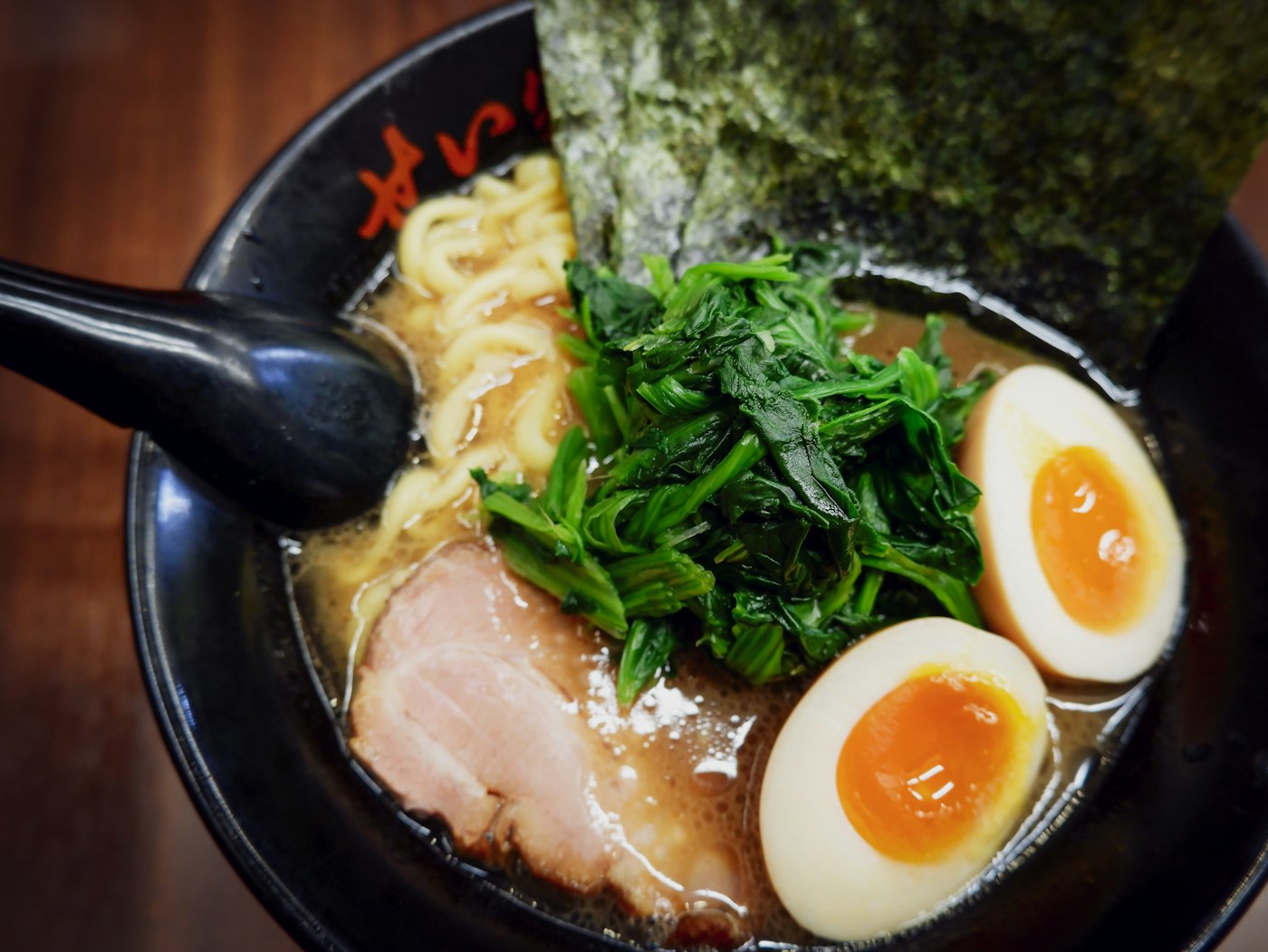
Dining in Japan is an experience — approach it with curiosity and respect. Photo: Unsplash
Before & After the Meal
Good to KnowTwo phrases bookend every Japanese meal. Before eating: Itadakimasu (いただきます) — it translates roughly as “I humbly receive this meal” and is said quietly with hands pressed together. After eating: Gochisōsama deshita (ごちそうさまでした) — meaning “thank you for the feast.” Saying these isn’t required of tourists, but doing so will visibly delight any Japanese host, restaurant owner, or local dining companion. It signals genuine appreciation for food and culture beyond just paying for a meal.
Chopstick Rules
EssentialA few chopstick behaviours carry significant cultural weight in Japan, rooted in Buddhist funeral rituals — and violating them, even accidentally, can cause genuine discomfort. Never stick chopsticks vertically into a bowl of rice — this mirrors the incense sticks placed at a Buddhist funeral. Never pass food from chopstick to chopstick — this replicates how cremated bones are transferred during a funeral. Don’t use chopsticks to point at food, people, or anything else. Rest your chopsticks on the provided chopstick rest (hashi oki) or across the rim of your bowl when not using them.
Pouring Drinks
Good to KnowWhen dining with others, pour drinks for your companions before filling your own glass — this is a fundamental expression of consideration in Japanese dining culture. If someone reaches to fill your glass, accept gracefully (holding your glass slightly toward them). In formal settings, it’s polite to wait until everyone has been served before drinking. When toasting, the word is Kanpai (乾杯) — make eye contact as you clink glasses.
Slurping Noodles
Good to KnowThis one surprises most Western visitors: slurping noodles is completely acceptable in Japan — and widely seen as a sign that you’re genuinely enjoying the food. When eating ramen, soba, udon, or somen, a certain amount of slurping is expected and natural. Don’t go out of your way to make noise, but don’t feel the need to eat in total silence either. The cultural logic: slurping aerates the broth and cools hot noodles as you eat them, enhancing the flavour.
Oshibori (Hot Towel)
Good to KnowMost Japanese restaurants begin your meal by presenting an oshibori — a small wet towel (sometimes hot, sometimes cold) for cleaning your hands before eating. Use it to wipe your hands, then fold or roll it neatly and set it aside. Don’t use it to wipe your face, neck, or the table — it’s specifically for hands. This is one of those small touches that, done correctly, signals that you know what you’re doing.
Ordering & Getting Attention
ImportantIn Japan, servers won’t typically check in on you repeatedly. At many restaurants, you call them by raising your hand and saying Sumimasen (すみません — excuse me). Don’t snap your fingers, wave aggressively, or shout across the room. Many modern restaurants use table buzzers or tablet ordering systems, which makes the language barrier essentially irrelevant. At ramen counters and traditional restaurants, a ticket machine (shokken-ki) outside the entrance lets you order and pay before being seated.
Paying the Bill
ImportantJapanese restaurant etiquette around payment has a few important nuances. In most traditional restaurants, you pay at the register on your way out — not at the table. Don’t leave cash on the table and walk out; bring the receipt or ask to pay. Splitting bills (Dutch-treat style) is common among friends in Japan, but it’s usually handled at the register rather than by calculating individual totals. Many smaller and traditional restaurants still require cash — always carry ¥5,000–10,000 for this reason, regardless of how cashless-forward your trip has been.
6. Onsen (Hot Spring) Etiquette
Visiting an onsen is non-negotiable on a serious Japan trip — the experience of soaking in a natural hot spring, often with mountain or garden views, is genuinely unlike anything else. But onsen have the most strictly observed etiquette of any experience in Japan, and getting it wrong is acutely uncomfortable for everyone. Learn the rules once and you’ll never have to think about them again.
Wash First — Always
EssentialThe single most important onsen rule: wash thoroughly before entering the communal bath. Every onsen provides individual shower stations around the bathing area. Sit on the small stool, use the provided soap and shampoo, and rinse off completely before approaching the communal pool. Hair must also be tied up or held out of the water while in the bath. Entering the pool before washing is considered deeply unhygienic and genuinely offensive to other bathers.
No Swimwear
EssentialTraditional onsen are used completely nude. Swimwear is not permitted. This is the custom, and it applies universally — the pool water isn’t compatible with dyes and fabrics. Your small modesty towel (provided at the entrance or included with ryokan stay) can be folded and placed on your head or held — but it must not enter the water. Many onsen also don’t permit people with tattoos, due to a historical association with organised crime. This policy has been relaxing in recent years at tourist-focused and private onsen, but always check in advance — particularly if you have visible tattoos.
Quiet & Calm
ImportantOnsen are spaces for relaxation and quiet contemplation. Keep conversations hushed, avoid splashing, and don’t bring food or drinks into the bathing area (drinks are fine in the changing room or designated lounge areas). Many onsen have gender-segregated baths — look for the curtains marked 男 (men, blue) and 女 (women, red). Some onsen also offer konyoku (mixed bathing) — but these are specifically designated as such.
No Photography — Absolutely
EssentialPhotography is strictly prohibited in all onsen and changing areas — for obvious privacy reasons. Your phone should be stored in your locker before you enter the bathing area. This rule is absolute and universally enforced. Taking photos in or near the bathing area, even accidentally with your phone out, can result in being asked to leave immediately.
7. Shopping & Money Etiquette
Japan is one of the best shopping destinations in the world — department store basement food halls (depachika), specialist markets, electronics stores, and brand flagships. The shopping experience is also governed by a clear set of customs that, once understood, make the whole thing significantly more enjoyable.
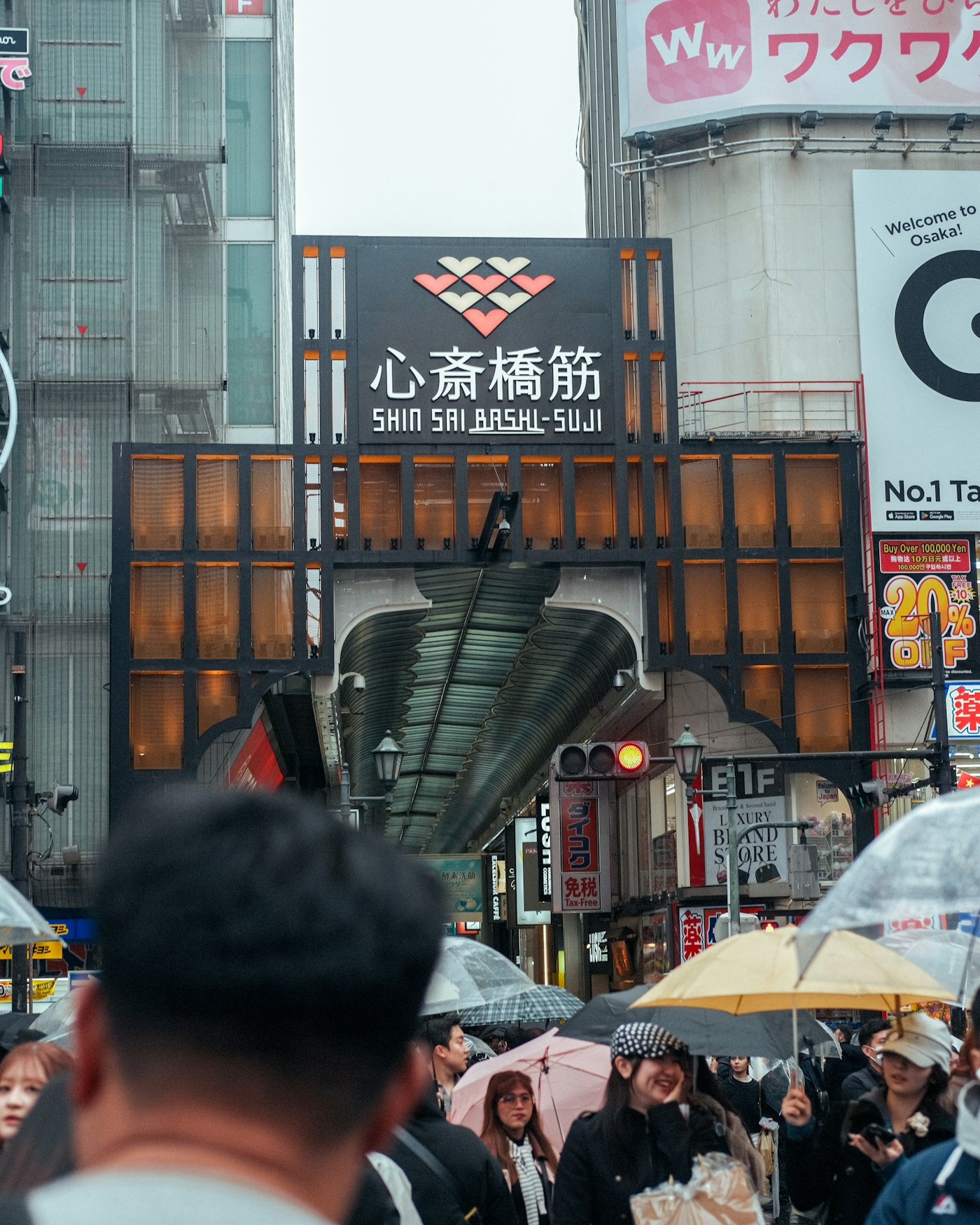
Japan’s covered shopping arcades (shotengai) are a world unto themselves. Photo: Unsplash
Handling Cash & Cards
EssentialWhen paying, always place your money or card in the small tray provided at the register — not directly into the cashier’s hand. This is universal across Japan, from convenience stores to department stores. The cashier will also return change and receipts via the tray. This system keeps transactions clean, reduces handling errors, and is simply how it’s done. Trying to hand cash directly can cause momentary confusion.
Receiving Items
Good to KnowWhen a shopkeeper or vendor presents you with a business card, a bagged purchase, or a gift, receive it with both hands and a slight bow. This is one of those small gestures that signals genuine cultural awareness. In more casual contexts (buying a onigiri at 7-Eleven), this isn’t necessary — but in boutiques, gift shops, and traditional stores, it makes a noticeable difference.
Bargaining
EssentialBargaining is not practised in Japan — at all. Prices in shops, markets, and restaurants are fixed. Attempting to negotiate or haggle will cause visible discomfort to the seller and is seen as disrespectful to the craft and pricing process. The only exception is very large electronics purchases, where a polite request for a small discount or free accessory (rather than a price negotiation) is occasionally accommodated at major stores like Yodobashi Camera or Bic Camera. Even then, it’s rare and never expected.
For cashless payment, Japan’s IC card system (Suica, Pasmo) remains the most convenient option for day-to-day purchases at stations, convenience stores, and vending machines. For an eSIM to keep you connected throughout your shopping and sightseeing, we recommend setting up [AFFILIATE LINK: Airalo] before you fly — Japan data plans are affordable and activate the moment you land.
8. Photography Etiquette
Japan is one of the most photogenic countries on earth. Every neighbourhood, every plate of food, every temple pathway seems designed to be photographed. But in 2026, the rules around photography have tightened significantly in several key areas — both through formal restriction and through evolving social norms around privacy.
Photography Bans — Updated for 2026
EssentialThe following areas have explicit photography restrictions in 2026: Kyoto Gion district — several alleys are completely off-limits, with signs warning of fines. Nara deer park — flash photography at the deer has been banned in response to tourist behaviour. Temple interiors — even where photography was previously tolerated, many have introduced restrictions; always look for signage or ask. Sumo stables and traditional performing arts venues — photography is restricted or banned entirely in many cases. The principle: if in doubt, don’t shoot until you’ve checked.
Photographing Geisha (Geiko / Maiko)
EssentialPhotographing or filming geiko (geisha) and maiko (apprentice geisha) in Kyoto’s Gion district without permission is explicitly prohibited. These women are professionals going about their working day — not tourist attractions. Chasing, cornering, or blocking their path for a photo is behaviour that has led to official signage, police presence, and, since 2024, potential fines. If you happen to see a geiko in Gion, admire from a distance and let them pass. Some dedicated ochaya (teahouse) experiences available through booking platforms allow proper, respectful interaction — that’s the right context.
Photographing People
ImportantJapan has a strong cultural expectation of personal privacy in public. Photographing strangers — particularly close-up portraits — without their consent is considered intrusive. Street photography in the Western journalistic tradition exists, but it sits in an uncomfortable grey area in Japan. If you want to photograph someone specifically, use gestures and eye contact to ask (a camera gesture and questioning expression usually communicates the request clearly). Most people will either agree graciously or politely decline, and both responses should be respected.
9. Hotel & Ryokan Etiquette
Whether you’re staying in a budget business hotel, a boutique hostel, or a centuries-old ryokan, Japanese accommodation has its own set of customs. Ryokan in particular offer an extraordinarily immersive cultural experience — but they require a bit more cultural awareness than checking into a standard hotel.
Removing Shoes
EssentialAt ryokan and many traditional guesthouses, you’ll remove your outdoor shoes at the entrance (genkan) and change into the provided slippers. Look for the distinct step-up threshold at the entrance — this is where outdoor shoes end and indoor life begins. Place your shoes neatly in the provided rack or to the side of the entrance. In ryokan rooms, you’ll typically remove slippers again when stepping onto tatami mats — tatami should only be walked on in socked feet. Separate toilet slippers are provided for the bathroom — change into these and back again each time.
Shared Baths at Ryokan
ImportantMost ryokan have either communal or private onsen baths. If communal, the same rules as regular onsen apply: wash thoroughly before entering, no swimwear, no photography, maintain quiet. Many ryokan also have in-room baths — but even these are used for soaking, not for washing. Wash in the shower before soaking. The bathtub water in a ryokan room is often shared by multiple family members sequentially and is kept hot and clean between uses, meaning the first person in should not drain it immediately.
Yukata (Informal Kimono)
Good to KnowRyokan typically provide a yukata — a lightweight cotton informal kimono — for guests to wear in the room, at dinner, and while walking around the ryokan’s corridors and common areas. Put on the yukata with the left side over the right (right over left is the funeral wrapping direction). It’s perfectly acceptable to wear your yukata to dinner at the ryokan. At some ryokan, guests wear their yukata to the communal onsen as well (removed before entering the bath). Wearing a yukata on the street outside the ryokan is also acceptable and actually charming — particularly in traditional onsen towns like Hakone or Kinosaki.
Looking for the best ryokan and hotels in Japan for your 2026 trip? [AFFILIATE LINK: Booking.com] and [AFFILIATE LINK: Agoda] both have excellent coverage of Japan’s full accommodation range — from ¥5,000-a-night capsule hotels to ¥80,000+ per person ryokan with private hot spring suites. Filter by “ryokan” or “traditional Japanese” to find the authentic options.
10. Language Tips & Communication
You don’t need to speak Japanese to have an extraordinary time in Japan. But learning even ten words of Japanese will change the quality of your interactions in a way that’s hard to overstate. Japanese people are deeply appreciative of any visitor who makes a genuine effort with the language — and the effort involved is genuinely minimal.
Essential Phrases
EssentialThese ten phrases will serve you in almost every situation: Sumimasen (すみません) — Excuse me / Sorry (general purpose, used constantly). Arigatō gozaimasu (ありがとうございます) — Thank you (polite). Onegaishimasu (おねがいします) — Please (when making a request). Itadakimasu — Said before eating. Gochisōsama deshita — Said after eating. Doko desu ka? (どこですか?) — Where is it? (point at a map and ask this). Ikura desu ka? (いくらですか?) — How much is it? Hai / Iie (はい/いいえ) — Yes / No. Eigo wakarimasu ka? (英語わかりますか?) — Do you understand English? Kanpai! (乾杯!) — Cheers!
Translation Apps
EssentialIn 2026, Google Translate’s camera mode is genuinely magic for Japan travel. Point your phone camera at a Japanese menu, sign, or label and it translates in real-time, overlaying the English text directly onto the image. Download the Japanese language pack for offline use before you fly — it works even underground in the metro without a data connection. For more nuanced conversational translation, the AI conversation mode works surprisingly well for basic communication at restaurants and shops. This single tool removes 90% of the language barrier for practical daily situations.
When Communication Breaks Down
Good to KnowStay calm and use visual tools. Point at menu pictures. Use your phone for translation. Draw or sketch what you need. Many Japanese people understand written English better than spoken English — writing your question on your phone’s notepad and showing it can break through a communication barrier that speaking can’t. Japanese people will often go to considerable effort to help even with minimal shared language, particularly if you approach the interaction with a smile and genuine patience rather than frustration.
Quick Reference Summary Table
Here’s every major Japan etiquette rule at a glance — bookmark this for your trip.
| Situation | Category | Rule / Norm | Essential? |
|---|---|---|---|
| Greeting | Social | Bow lightly; no handshake unless initiated | ✅ Must-Know |
| Rubbish | Social | Carry it; almost no public bins | ✅ Must-Know |
| Tipping | Social | Never tip — it’s not customary and can cause discomfort | ✅ Must-Know |
| Eating while walking | Social | Avoid outside of festival contexts | ⭐ Important |
| Noise levels | Social | Keep voice low in all public spaces | ✅ Must-Know |
| Phone calls on trains | Transport | No phone calls; silent mode required | ✅ Must-Know |
| Escalators | Transport | Stand left (Tokyo) / right (Osaka); leave one side free | ⭐ Important |
| Rush hour luggage | Transport | No large suitcases during peak hours | ⭐ Important |
| Torii gate | Shrine | Walk slightly off-centre; bow when passing | ⭐ Important |
| Temizuya (purification) | Shrine | Wash hands before approaching main hall | ✅ Must-Know |
| Chopsticks in rice | Dining | Never stick vertically — funeral connotation | ✅ Must-Know |
| Before eating | Dining | Say “Itadakimasu” — appreciated, not required | 💡 Nice Touch |
| Slurping noodles | Dining | Acceptable and normal | 💡 Nice Touch |
| Payment | Dining/Shopping | Use the payment tray; don’t hand cash directly | ✅ Must-Know |
| Onsen: washing | Onsen | Always shower thoroughly before entering bath | ✅ Must-Know |
| Onsen: swimwear | Onsen | No swimwear — traditional onsen are nude | ✅ Must-Know |
| Onsen: photography | Onsen | Absolutely no photography | ✅ Must-Know |
| Gion photography | Photography | Several alleys restricted; fines possible in 2026 | ✅ Must-Know |
| Geisha photography | Photography | Do not photograph or follow geiko/maiko | ✅ Must-Know |
| Shoes at ryokan | Accommodation | Remove at genkan; use provided slippers | ✅ Must-Know |
| Departure tax | 2026 New Rule | Rises to ¥3,000 per person from July 1, 2026 | ✅ Must-Know |
| Tax-free shopping | 2026 New Rule | Refund at airport from November 1, 2026 | ✅ Must-Know |
| Shinkansen baggage | 2026 New Rule | 160cm+ bags need reserved seat; ¥1,000 fine otherwise | ✅ Must-Know |
| Bargaining | Shopping | Never bargain — prices are fixed everywhere | ✅ Must-Know |
Pre-Departure Etiquette Checklist
Here’s everything to review before your Japan trip so etiquette is second nature from your first day on the ground.
📋 Japan Etiquette: Pre-Departure Checklist
- Learn 10 core Japanese phrases (Sumimasen, Arigatō, Itadakimasu, etc.)
- Download Google Translate with the Japanese offline language pack
- Set up Suica or Pasmo IC card on your phone for cashless travel
- Carry ¥5,000–10,000 cash at all times for cash-only restaurants and shops
- Pack a small bag for carrying rubbish (no public bins in Japan)
- Check departure date — does it fall before or after July 1? (departure tax change)
- If shopping, check if your visit extends past November 1 (tax refund system change)
- Check your suitcase dimensions if taking the Shinkansen (160cm limit)
- Research tattoo policies if you plan to visit onsen (or book tattoo-OK options)
- If visiting Kyoto’s Gion, review current photography restrictions before arrival
- Book key experiences in advance — Klook for cultural activities and onsen day passes
- Get an Airalo Japan eSIM and activate before departure for instant connectivity
- Book accommodation early — particularly ryokan and peak-season hotels
- Read our full train guide before arriving How to Ride Trains in Japan guide
- 10-Day Japan Itinerary: The Complete First-Timer’s Guide
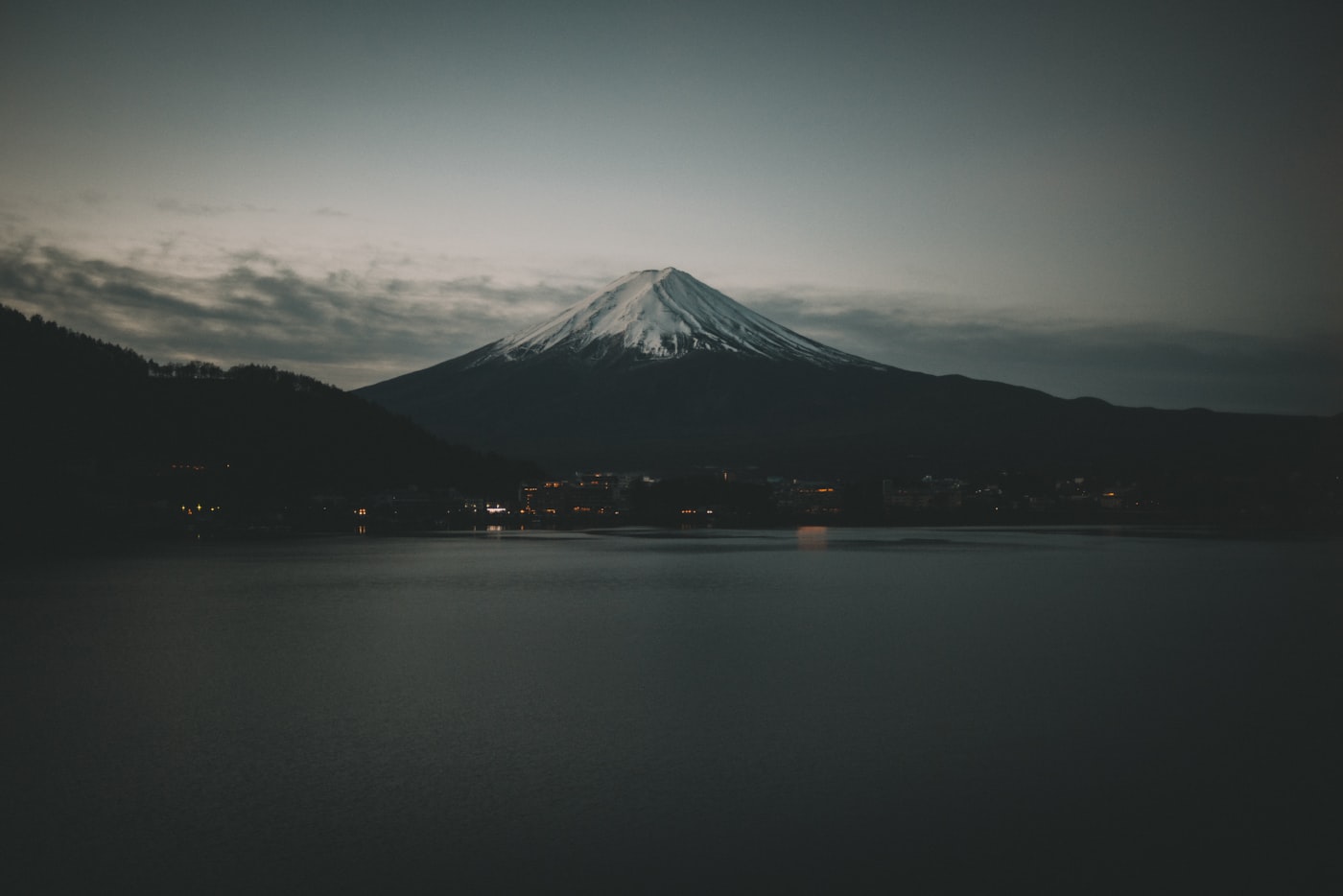
Japan rewards those who arrive prepared and leave respectfully. Photo: Unsplash
Final Thoughts
Japan isn’t a difficult country to visit. In many ways, it’s one of the easiest — the trains run on time, the streets are safe, the food is extraordinary, and the people are genuinely kind. But it is a country that runs on a different set of social expectations than most visitors are used to, and those expectations exist for good reason: they’re what make Japan feel so remarkably ordered, peaceful, and respectful compared to almost anywhere else on earth.
The etiquette we’ve outlined above isn’t a burden or a rulebook to memorise — it’s context. Once you understand why Japan operates the way it does, following the customs stops feeling like an obligation and starts feeling like participation. And that shift — from tourist to respectful participant — is what genuinely transforms a Japan trip.
You’ll make mistakes. Everyone does. A momentarily pointed finger, forgetting to bow when leaving a shop, using the wrong escalator side in Osaka — none of this will cause lasting offence. Japanese people are extraordinarily patient with first-time visitors who are clearly making an effort. The key is the effort itself.
Japan is, genuinely, one of the most rewarding destinations on the planet. Go prepared, go respectfully, and go with curiosity — and it will give you back tenfold.
Enjoy every single moment of your trip. 行ってらっしゃい — safe travels.
Ready to Plan Your Japan Trip?
Now that you’ve mastered the etiquette, dive into the rest of our Japan planning guides — budgets, packing lists, itineraries, and transport breakdowns, all built for first-time visitors.
Explore All Japan Guides →More Japan Travel Guides
- How to Ride Trains in Japan – A Complete Beginner’s Guide
- How to Use IC Card in Japan – Suica & Pasmo Guide
- Japan Travel Budget 2026: How Much Does a Trip to Japan Really Cost?
- Japan Packing List 2026: Everything You Actually Need
- Best Apps for Traveling Japan: The Complete 2026 Guide [INTERNAL LINK]

コメント